- Welcome to YOCH Bearing!
- 0086-531-85866205
- 0086-16653196205
- market@yochibearing.com

SKF Sealed Bearing Model Identification and Selection Guide
Linear Bearing Sliding Characteristics and Transmission Equipment Application Guide
24/06/2026
How Self-Aligning Roller Bearings Solve Equipment Misalignment Faults
29/06/2026In industrial applications, proper identification and selection of sealed bearings are critical to ensuring equipment reliability and extending service life. SKF, as a leading global bearing manufacturer, offers a comprehensive range of sealed bearing solutions designed to meet diverse operating conditions. Understanding the model identification system and selection criteria for SKF sealed bearings enables engineers and maintenance professionals to make informed decisions that optimize performance and reduce downtime.
Understanding SKF Bearing Sealing Solutions
SKF provides multiple sealing configurations to protect bearings from contamination and retain lubrication. The primary seal types include contact seals, non-contact seals, and labyrinth seals. Contact seals, typically made of nitrile rubber (NBR) or fluoro rubber (FKM), provide excellent protection against dust, moisture, and other contaminants. Non-contact seals, such as shields (designated by the suffix Z) and low-friction seals, offer reduced operating temperatures while maintaining adequate protection. Labyrinth seals are ideal for high-speed applications where minimal friction is essential.
The selection of the appropriate sealing solution depends on several factors, including the operating environment, speed requirements, temperature conditions, and the type of lubricant used. SKF’s extensive catalog provides detailed specifications for each sealing option, ensuring compatibility with specific application demands.
SKF Bearing Model Designation System
SKF employs a standardized designation system that clearly identifies the sealing configuration within the bearing model number. The suffixes appended to the basic bearing designation indicate the type of seal or shield installed. Common suffixes include:
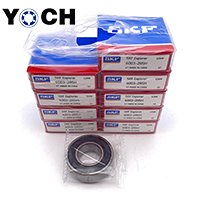
- 2RS1 or 2RS: Indicates a bearing fitted with contact seals on both sides, typically made of NBR rubber and reinforced with a sheet steel insert.
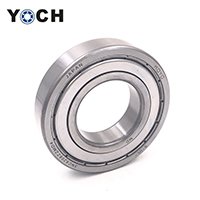
- 2Z: Denotes a bearing with sheet steel shields on both sides, providing non-contact sealing suitable for clean environments.
- 2RZ: Represents low-friction contact seals on both sides, offering a balance between sealing efficiency and reduced torque.
- 2RSL: Similar to 2RZ but with additional design features for specific performance requirements.
Understanding these suffixes is essential for accurate bearing identification and replacement. For example, a deep groove ball bearing designated as 6205-2RS1 indicates a bearing with contact seals on both sides, while 6205-2Z signifies shielded protection.
Bearing Seal Material Selection Criteria
The material composition of SKF bearing seals significantly impacts performance and longevity. Nitrile rubber (NBR) remains the most common seal material due to its excellent resistance to petroleum-based oils and greases, along with good mechanical properties across a typical operating temperature range of -40°C to +100°C. For elevated temperature applications or exposure to aggressive chemicals, fluoro rubber (FKM) seals are recommended, capable of withstanding temperatures up to +200°C.
In food processing and pharmaceutical industries where contamination must be avoided, SKF offers seals manufactured from FDA-compliant materials. Additionally, hydrogenated nitrile rubber (HNBR) provides enhanced wear resistance and thermal stability for demanding industrial environments. Selecting the correct seal material prevents premature degradation and ensures consistent bearing performance throughout the intended service life.
Bearing Application Environment Assessment
Evaluating the operating environment is a fundamental step in selecting the appropriate SKF sealed bearing. Contamination levels, moisture exposure, and the presence of corrosive agents directly influence seal choice. In heavily contaminated environments such as mining, agriculture, or construction equipment, bearings with robust contact seals (2RS1) are strongly recommended to prevent ingress of abrasive particles.
For applications involving high-pressure washdowns, such as food and beverage processing, SKF offers bearings with optimized seal designs that withstand direct water jets while maintaining lubricant retention. Conversely, in clean, dry environments with moderate speeds, shielded bearings (2Z) may provide sufficient protection while minimizing friction losses. Accurate environmental assessment prevents both under-specification, which leads to premature failure, and over-specification, which unnecessarily increases operating costs.
Bearing Speed and Temperature Considerations
Operating speed and temperature are critical parameters that influence sealed bearing selection. Contact seals generate frictional heat, which becomes more significant at higher rotational speeds. SKF provides limiting speed ratings for each bearing and seal combination, and exceeding these limits can result in excessive temperature rise, lubricant degradation, and seal damage.
For high-speed applications, non-contact shields (2Z) or low-friction seals (2RZ) are preferred to minimize heat generation. When operating temperatures exceed the capabilities of standard NBR seals, alternative materials such as FKM or specialized PTFE-based seals must be considered. SKF’s technical documentation includes detailed speed and temperature ratings to guide proper selection and ensure reliable operation under specific conditions.
Bearing Lubrication and Seal Compatibility
The interaction between the bearing lubricant and the seal material is a crucial consideration in sealed bearing selection. SKF sealed bearings are typically pre-lubricated with high-quality greases selected for compatibility with the seal material and the intended application. Standard bearings with RS1 seals contain lithium-based greases suitable for general-purpose applications.
For specialized conditions, SKF offers bearings with alternative lubricants, including high-temperature greases, food-grade lubricants, and low-temperature formulations. It is essential to verify that the seal material remains compatible with any relubrication practices or alternative lubricants used during maintenance. Incompatible lubricants can cause seal swelling, hardening, or chemical degradation, compromising the sealing effectiveness and leading to premature bearing failure.
Bearing Installation and Maintenance Best Practices
Proper installation techniques are essential to preserve the integrity of SKF sealed bearings. Seals can be easily damaged by improper handling, excessive force, or contact with sharp edges during mounting. Always use appropriate mounting tools and follow SKF’s recommended procedures to avoid seal distortion or displacement.
During maintenance, inspect sealed bearings for signs of seal wear, cracking, or leakage. Unlike open bearings, sealed bearings are generally not designed for relubrication, as the seal design prevents grease entry and may be damaged by regreasing attempts. When replacement becomes necessary, always verify the complete bearing designation, including the seal suffix, to ensure the replacement bearing matches the original specifications. Maintaining accurate records of bearing designations facilitates efficient inventory management and reduces the risk of incorrect replacements.
Conclusion
Accurate identification and thoughtful selection of SKF sealed bearings are fundamental to achieving optimal equipment performance and maximizing service intervals. By understanding the designation system, evaluating environmental conditions, and considering speed, temperature, and lubrication requirements, maintenance professionals can confidently specify the correct bearing for each application. SKF’s comprehensive range of sealing solutions provides reliable protection across diverse industrial sectors, ensuring that bearings operate efficiently even in the most challenging environments.
We are a bearing supplier from China. If you want to learn more about other bearing knowledge, you can watch our YouTube or contact us.