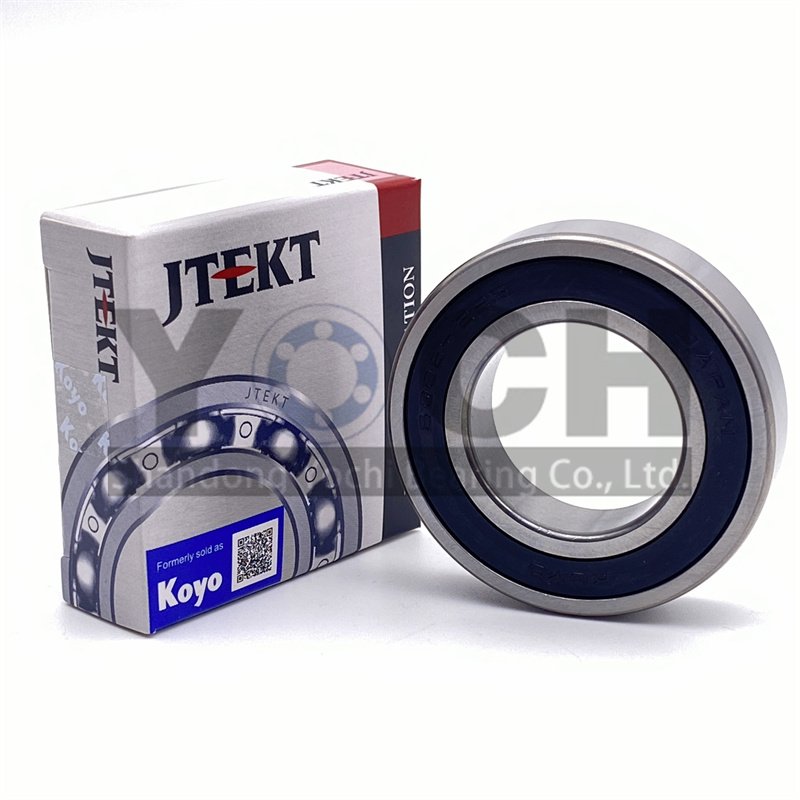
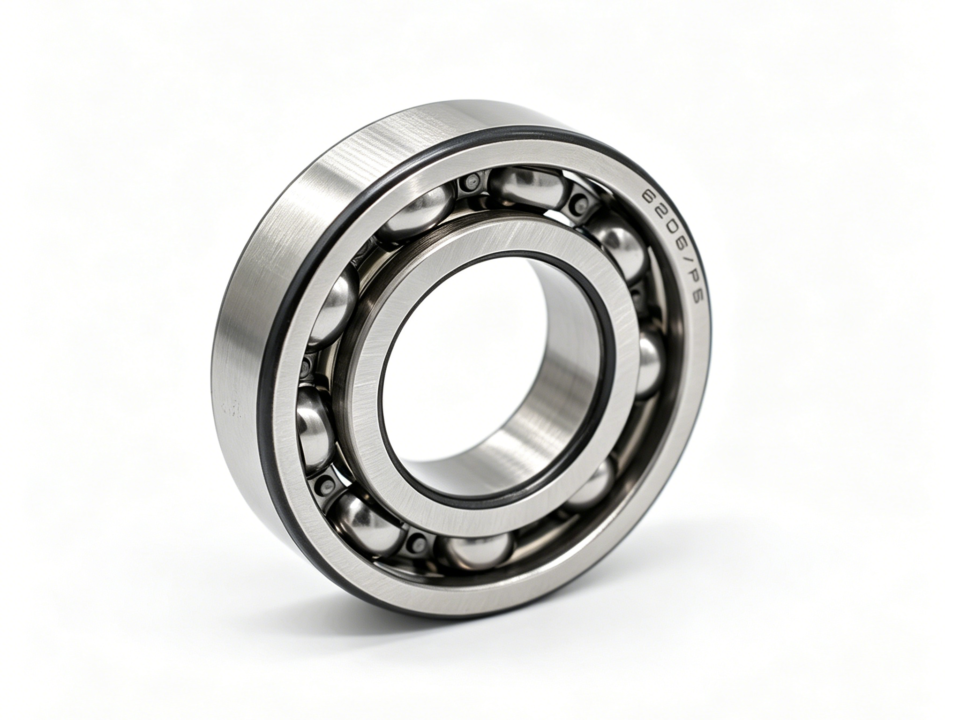
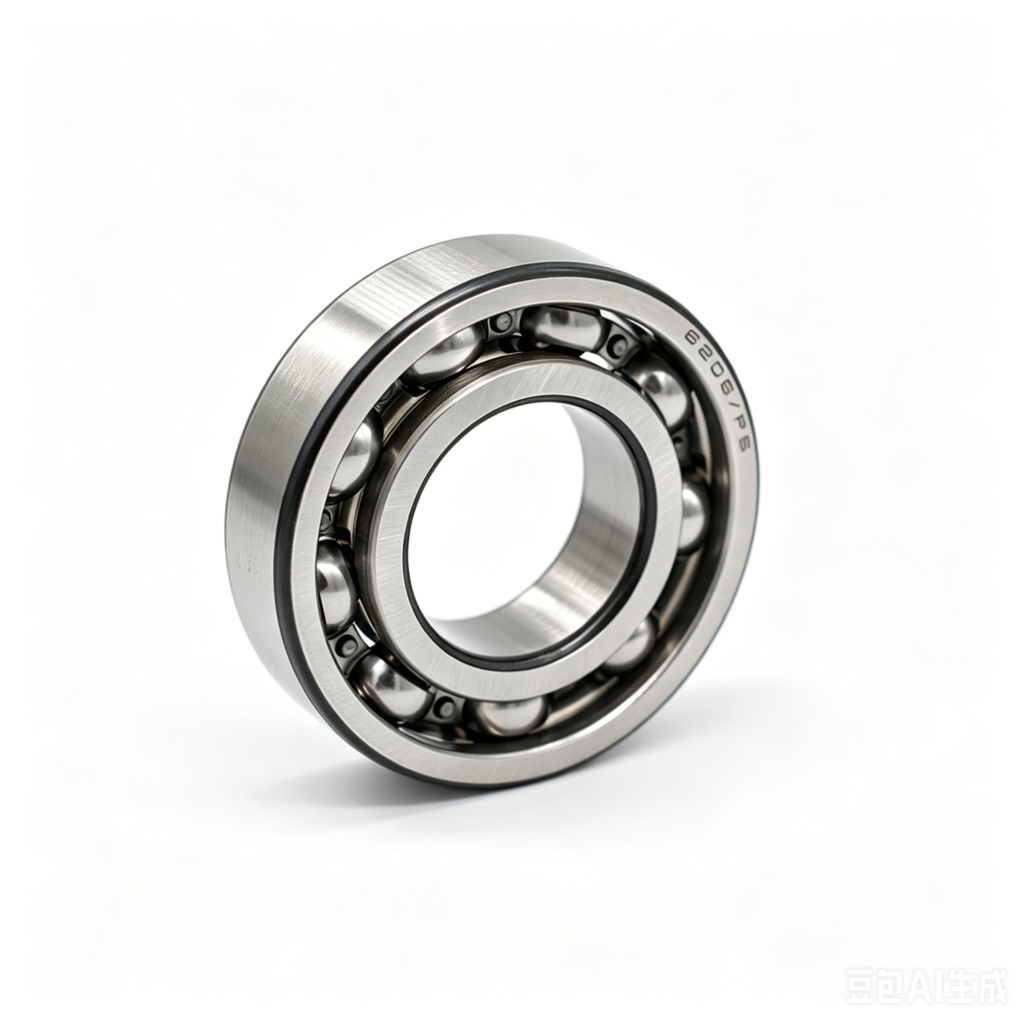
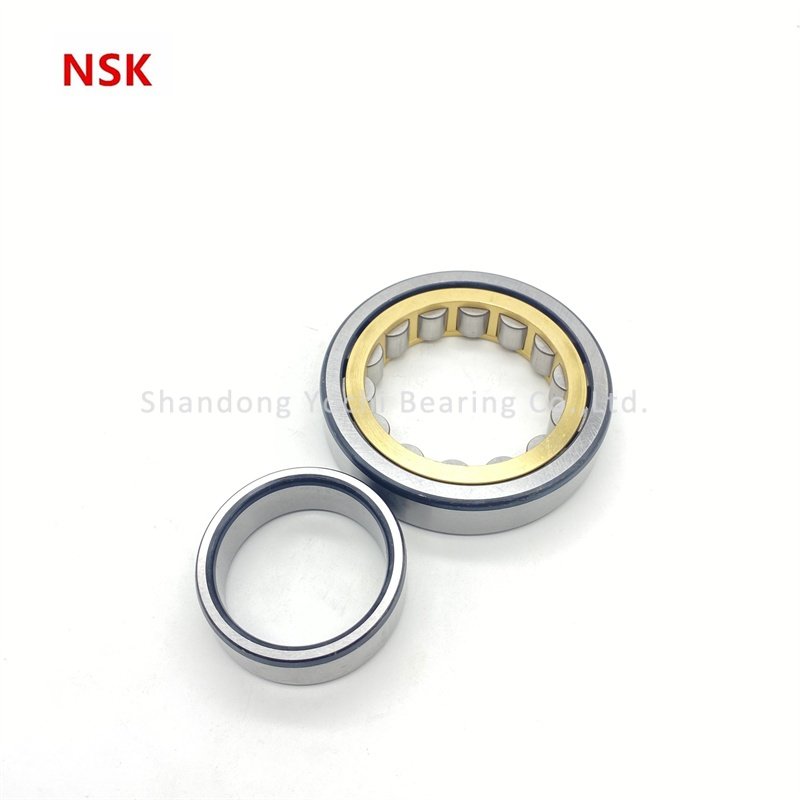
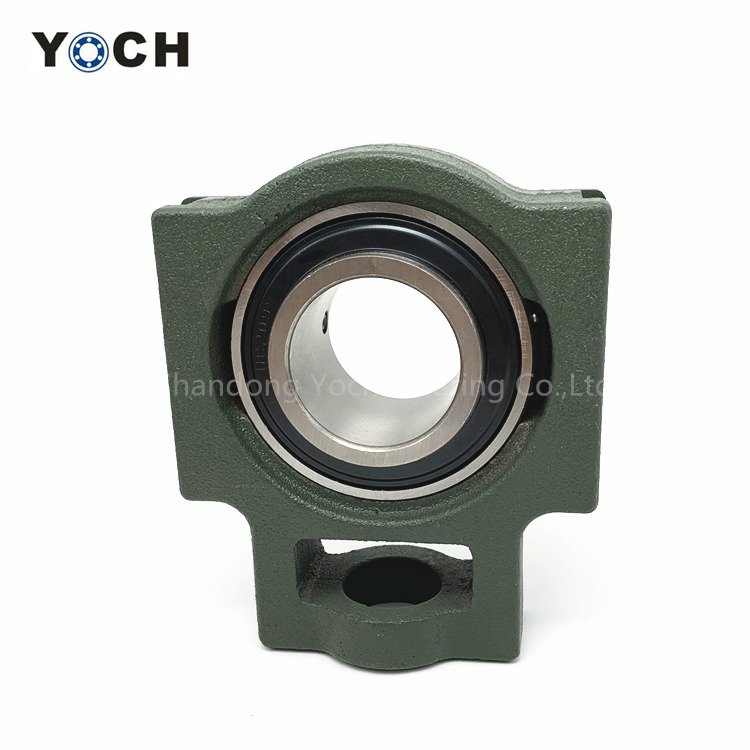
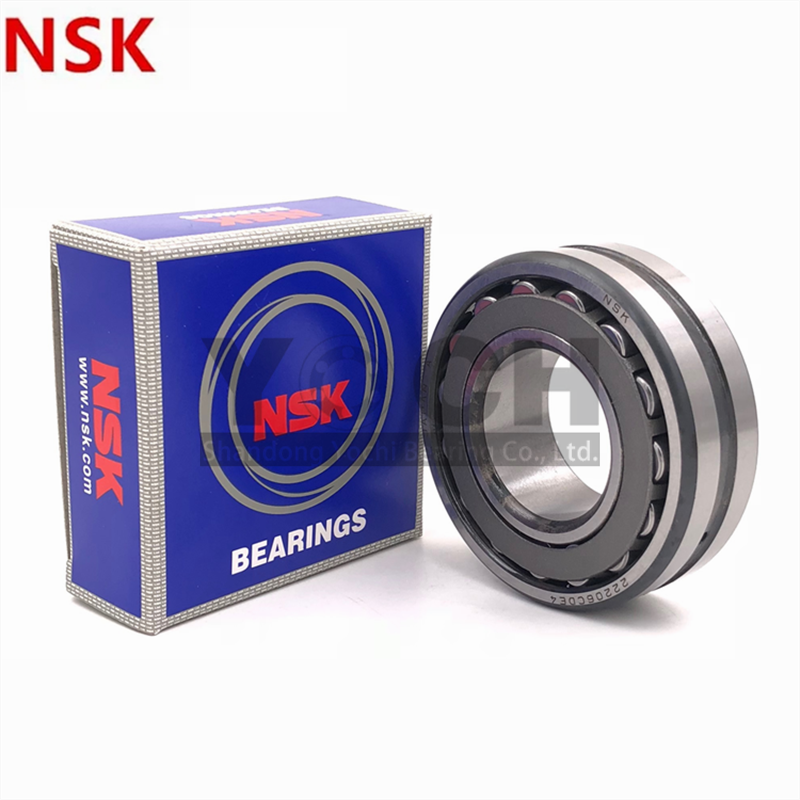
Deep groove ball bearing consists of an outer ring, an inner ring, a set of steel balls and a set of cages.
It mainly bears pure radial loads, but also can bear joint loads. When it is subjected to pure radial load, its contact Angle is zero. When it has a larger radial game, that is, it has angular contact bearing performance, which can withstand a larger axial load. Deep groove ball bearing has small friction coefficient and high limit speed, so it has more advantages than thrust bearing when axial load is rotating at high speed. But because its aligning performance is limited, the concentricity of bearing installation should be high, otherwise it will affect the balance of its operation, increase the bearing stress, and thus shorten the working life.
Deep groove ball bearing simple structure, compared with other easy to achieve high precision, so can be mass production. In addition to the conventional models, it also has a variety of structural variations, such as deep groove ball bearing with dust cover, deep groove ball bearing with rubber ring and deep groove ball bearing with a stop groove and so on.
What Are The Bearing Dust Cover Materials
A:Bearing dust cover materials are iron, rubber coated iron, stainless steel plate, but the most commonly used or spcc cold plate.
SPCC was originally the Japanese standard (JIS) for the general use of cold rolled carbon steel sheet and steel strip name, now many countries or enterprises directly used to represent their own production of similar steel (such as Baosteel Q/BQB402 standard SPCC). Chemical composition of SPCC Table C: ≤0.10 Si: ≤0.05 Mn: ≤0.50 P: ≤0.035 S: ≤0.025