- Welcome to YOCH Bearing!
- 0086-531-85866205
- 0086-16653196205
- market@yochibearing.com

Bearings, How To Clean Correctly?

Q1:How to determine the size of bearing inside and outside diameter?
15/08/2022
Q1:Excuse me KG. XD. NSB. TMB. NH. The CWB. HCL. INT. J HDH. KML is what bearing factory code respectively?
05/09/2022Bearings, How To Clean Correctly?
As we all know, the vast majority of newly bought bearings are coated with grease, but these oils are mainly used to prevent bearing rust, and do not play a lubrication role, and bearings are particularly easy to hide dirt, generally difficult to clean thoroughly. Even if you buy bearings without lubricating oil, for a long time, they will absorb dust due to magnetism and airflow. Then mixed sweat, water vapor and so on in the bearing, between the ball, the gap gathered to form a “dirt community”, which is “fatal” to the bearing rotation.
If the bearing is used for a long time, it will contact with dust, oil or water in the air, causing the bearing to dry out, rust and affect the operation. At this time, bearing cleaning is very important.
How to clean bearings correctly:
When disassembling the bearing for maintenance, first record the appearance of the bearing, confirm the residual amount of lubricant, sample the lubricant used for inspection, and then clean the bearing.
The selected cleaning agent, generally speaking, the rust prevention oil sealed on the bearing, can be cleaned with solvent cleaning agent. If there is thick anti-rust oil on the bearing, you can first use metal parts solvent based oil cleaner, such as WY-Y155 of wuyang Hydrocarbon of our company, properly heat to dissolve and clean, remove the rust oil on the surface after it is dissolved, and then wipe it.
When cleaning, one hand should hold the inner ring of the bearing, and the other hand should slowly turn the outer ring, until the rolling body of the bearing, the raceway, and keep the oil on the shelf completely washed off, and then clean the surface of the outer ring of the bearing.
At the beginning of cleaning, turn slowly and shake reciprocating, and do not rotate too hard, otherwise the raceway and rolling body of bearings are easy to be attached to dirt. When the number of bearing cleaning is large, it can be divided into coarse and fine cleaning. When rough cleaning, if the bearing rotates with stolen goods, it will damage the rolling surface of the bearing, and attention should be paid to it. In the crude cleaning oil, use the brush to remove grease, sticky matter, roughly clean, into fine washing. Fine cleaning is to rotate the bearing in the cleaning oil while carefully cleaning.
For bearings that are inconvenient to disassemble, they can be washed with parts cleaning agent first, so that the old oil melts, and then the residual oil in the bearing is washed with iron hook or small spoon, and there is no open fire when cleaning.
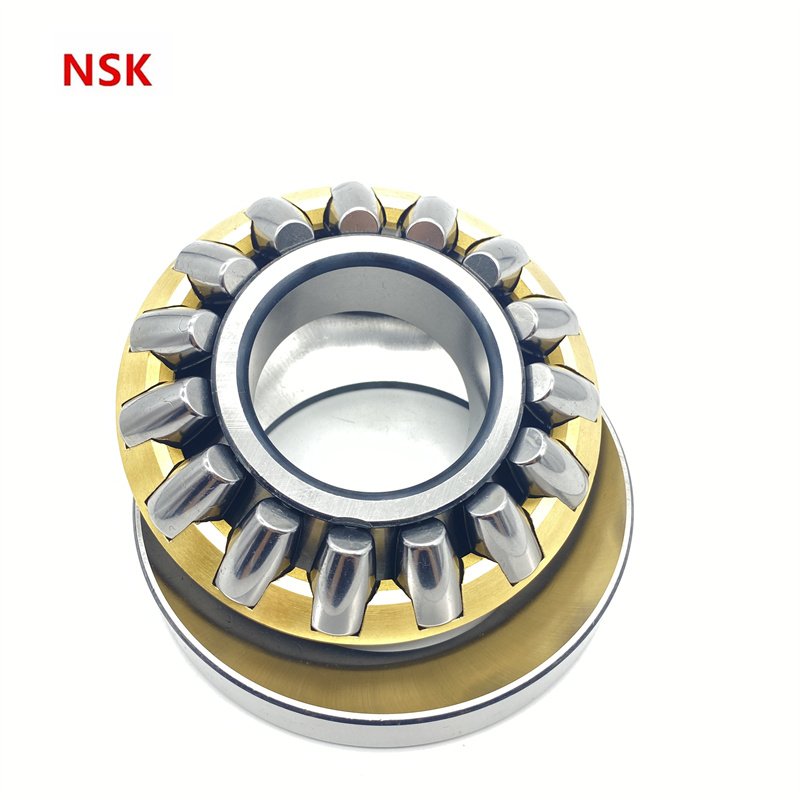
How to confirm that the bearing is cleaned:
After cleaning the bearing, carefully observe that there will always be some remaining oil in the inner and outer ring raceway, the rolling body and the gap of the cage. When testing, you can first use the remaining oil of the clean feeler gauge to scrape it out and apply it to your thumb. Rub it slowly with your index finger back and forth. If there is a rustling sound between your fingers, the bearing is not cleaned, and it should be washed again.
Finally, hold the bearing in hand, pinch the inner ring, and rotate the outer ring horizontally (large bearings can be placed on the assembly table, the inner ring cushion, the outer ring hanging in the air, press the inner ring, and rotate the outer ring). It is qualified to rotate flexibly, without block and without beating.
For the cleaned bearings, add lubricant, should be placed on the assembly table, mat with clean cloth or paper mat, covered with plastic cloth, for assembly, not allowed to be placed on the ground or box.
When moving the bearing, it should not be directly taken by hand, but should be wrapped with canvas gloves or a clean cloth, otherwise fingerprint rust may occur on the bearing surface.
Bearings with dust-proof covers or sealing rings on both sides, as well as bearings coated with anti-rust and lubricating grease, should not be cleaned before installation because grease has been injected at the time of manufacture.

Precautions for the use of bearings:
Bearing is a precision component, and its use must be correspondingly careful. No matter how high performance bearings are used, if they are not used properly, they will not get the expected high performance. Precautions for the use of bearings are as follows:
① Keep the bearing and its surrounding environment clean
Even if the tiny dust invisible to the naked eye enters the bearing, it will increase bearing wear, vibration and noise. Bearings and their surrounding accessories should be kept clean, especially dust and dirt, tools and the environment must also be kept clean.
② Precautions for installation
Strong stamping is not allowed, direct hammering of bearings with hammers is not allowed, and pressure transmission through rolling bodies is not allowed.
③ Use appropriate and accurate installation tools
Use special tools as much as possible and avoid cloth and staple fabrics.
④ To prevent the corrosion of bearings
When holding bearings directly by hand, the sweat on hands should be fully washed and coated with high-quality mineral oil before operation. In rainy season and summer, rust prevention should be paid special attention to. However, under certain special operating conditions, bearings can obtain a longer life than traditionally calculated, especially under light loads. These special operating conditions are when the rolling surface is effectively separated by a lubricating film to limit the surface damage that can be caused by contaminants. In fact, under ideal conditions, so-called permanent bearing life is possible.