- Welcome to YOCH Bearing!
- 0086-531-85866205
- 0086-16653196205
- market@yochibearing.com

Cylindrical Roller Bearing Methods for Reducing Mechanical Operating Noise

Analysis of High-Speed Operating Performance of Angular Contact Ball Bearings
03/08/2026
Self-Aligning Ball Bearings: Characteristics for Handling Shaft Misalignment
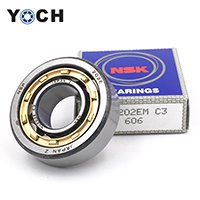
11/08/2026Excessive noise in rotating machinery often traces back to the bearing system. Cylindrical roller bearings, widely used in gearboxes, electric motors, and industrial pumps, can become significant noise sources when improperly selected, installed, or maintained. Addressing this issue requires a systematic approach that covers every stage of the bearing lifecycle. The following methods outline practical strategies for achieving quieter mechanical operation through proper bearing management.
Understanding Cylindrical Roller Bearing Noise Sources
Bearing noise rarely appears without cause. Common contributors include surface imperfections on raceways, inadequate lubrication film, contamination ingress, and improper mounting fits. When rollers traverse damaged raceway areas, they generate discrete impact sounds. Likewise, insufficient lubrication creates metal-to-metal contact, producing a continuous high-frequency whine. Identifying the root cause through vibration analysis and acoustic measurement is the essential first step toward effective noise mitigation.
Proper Bearing Selection for Noise Reduction
Not all cylindrical roller bearings offer the same acoustic performance. Precision-grade bearings with tighter dimensional tolerances produce significantly less vibration than standard grades. Selecting bearings with optimized cage designs, such as polyamide or brass cages, helps dampen roller movement and reduce rattling. Additionally, choosing bearings with higher accuracy class ratings ensures smoother roller-to-raceway contact, directly contributing to lower operating noise levels in demanding applications.
Bearing Installation Techniques to Minimize Noise
Incorrect mounting remains one of the leading causes of premature bearing noise. Applying force through the roller assembly during installation risks raceway brinelling and geometric distortion. Always mount cylindrical roller bearings by applying pressure evenly across the raceway ring being fitted. Using induction heaters for inner ring expansion prevents mechanical damage. Proper installation preserves the bearing’s original geometry and maintains the quiet running characteristics designed into the component.
Optimal Bearing Lubrication Strategies
Lubrication fundamentally determines how quietly a bearing operates. Too little grease allows direct metal contact, while excessive lubrication causes churning and elevated temperatures. For cylindrical roller bearings, selecting the correct lubricant viscosity based on operating speed and temperature ensures a stable elastohydrodynamic film. Regular relubrication intervals, determined by application severity, prevent lubricant degradation and maintain consistent noise suppression throughout the bearing service life.
Bearing Clearance Adjustment and Control
Internal clearance significantly influences acoustic behavior. Excessive clearance permits roller movement and impact against raceways, generating audible clicking. Conversely, excessive preload eliminates clearance entirely, causing heat buildup and screeching noises. Achieving the optimal clearance range—often slightly negative for rigidly mounted bearings—requires careful measurement during assembly. Controlled clearance ensures rollers track smoothly without unwanted axial or radial play that translates into mechanical noise.
Bearing Housing and Shaft Alignment
Misalignment between bearing seats introduces uneven load distribution across roller elements. This concentration creates localized stress zones that generate distinctive growling sounds during rotation. Maintaining shaft and housing tolerances within manufacturer specifications prevents angular misalignment. Using precision-machined housings and verifying alignment with dial indicators during assembly protects the bearing from eccentric loading and the associated noise penalties.
Regular Bearing Maintenance and Monitoring
Preventive maintenance extends beyond periodic relubrication. Implementing vibration monitoring programs allows early detection of bearing degradation before noise becomes audible to operators. Temperature sensors and oil particle counters provide additional indicators of incipient bearing distress. Establishing routine inspection schedules enables timely replacement of bearings showing early wear patterns, preventing minor acoustic issues from escalating into catastrophic failures that produce severe mechanical noise.
Advanced Bearing Materials for Quiet Operation
Modern metallurgical improvements offer substantial noise reduction benefits. Bearings manufactured from ultra-clean steel with reduced inclusion content exhibit superior surface finish durability. Ceramic roller elements, increasingly available for cylindrical roller bearing designs, minimize adhesive wear and operate with reduced friction coefficients. These advanced materials maintain dimensional stability under varying thermal conditions, preserving low-noise performance across extended operational periods.
Implementing these methods requires coordination between design engineers, maintenance technicians, and quality personnel. When cylindrical roller bearings are properly specified, carefully installed, correctly lubricated, and regularly monitored, mechanical systems achieve not only reduced noise levels but also extended service intervals and improved overall reliability. Quiet operation serves as a reliable indicator of healthy bearing condition and well-maintained rotating machinery.
We are a bearing supplier from China. If you want to learn more about other bearing knowledge, you can watch our YouTube or contact us.