- Welcome to YOCH Bearing!
- 0086-531-85866205
- 0086-16653196205
- market@yochibearing.com

Deep Groove Ball Bearing: Performance Characteristics and Industrial Applications Explained
Key Points for Long-Term Operational Reliability Management of Wind Turbine Main Shaft Bearings
27/05/2026
How to Read a Bearing Number
03/06/2026Deep groove ball bearings represent one of the most widely used bearing types in modern industrial machinery. Known for their versatility, high-speed capability, and cost-effectiveness, these bearings serve as critical components across countless mechanical systems. This article provides a comprehensive analysis of their performance characteristics and practical industrial applications.
What Is a Deep Groove Ball Bearing?
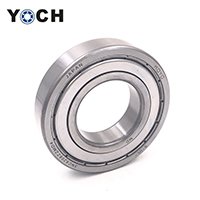
A deep groove ball bearing is a rolling-element bearing featuring raceway grooves with arc-shaped cross-sections that closely match the ball diameter. This unique geometry allows the bearing to accommodate both radial and axial loads simultaneously. The deep groove design enables higher load capacity compared to shallow groove alternatives, making it suitable for diverse operating conditions. Standard configurations include open designs, sealed variants, and shielded types to address different environmental challenges.
Key Performance Features of Deep Groove Ball Bearings
The performance advantages of this bearing category stem from several intrinsic design characteristics. First, deep groove ball bearings exhibit exceptionally low friction coefficients, which translates to minimal energy loss and reduced operating temperatures. Second, they maintain stable performance at high rotational speeds, often exceeding 15,000 RPM in precision applications. Third, the bearing demonstrates remarkable load distribution uniformity, preventing localized stress concentrations that typically cause premature fatigue failure. Additionally, modern manufacturing techniques enable these bearings to achieve ABEC-1 through ABEC-7 precision grades, satisfying requirements from general machinery to high-precision instrumentation.
Structural Advantages of Deep Groove Ball Bearing Design
The structural configuration of this bearing type delivers multiple engineering benefits. The deep raceway geometry creates a larger contact angle between the balls and raceways, enhancing axial load capacity without compromising radial performance. Steel cages, typically manufactured from pressed steel or brass, ensure optimal ball spacing while minimizing inertial effects during high-speed rotation. Furthermore, the bearing’s compact cross-sectional profile allows engineers to design space-efficient assemblies. Sealing solutions—ranging from rubber contact seals to non-contact metal shields—protect internal components from contamination while retaining lubrication, significantly extending service intervals.
Industrial Applications of Deep Groove Ball Bearings
The adaptability of deep groove ball bearings makes them indispensable across industrial sectors. In electric motors, these bearings support rotor shafts while maintaining the precision required for efficient electromagnetic conversion. Automotive applications utilize them in alternators, air conditioning compressors, and transmission systems where reliability under vibration is essential. The agricultural machinery sector depends on sealed bearing variants to withstand dusty environments and moisture exposure. Industrial pumps and compressors leverage their high-speed capability and low friction characteristics to maximize energy efficiency. Even household appliances—washing machines, refrigerators, and power tools—incorporate these bearings to ensure quiet, long-lasting operation.
Bearing Selection Criteria for Industrial Use
Selecting the appropriate deep groove ball bearing requires systematic evaluation of operational parameters. Load analysis must quantify both radial and axial force components to determine the required dynamic load rating. Speed limitations depend on cage material, lubrication method, and precision grade—factors that directly influence the maximum permissible DN value (bearing bore diameter in mm × rotational speed in RPM). Environmental considerations dictate seal selection: contact seals provide superior contamination protection but generate slightly higher friction, while shields offer speed advantages in clean environments. Temperature extremes necessitate special heat-treated steel or alternative cage materials to maintain dimensional stability and mechanical strength.
Maintenance Tips for Long-Term Bearing Performance
Proper maintenance protocols maximize the operational lifespan of deep groove ball bearings. Lubrication represents the most critical factor—grease lubrication suits most applications with sealed bearings, while oil lubrication addresses high-speed or high-temperature conditions. Monitoring bearing temperature and vibration signatures enables early detection of lubrication degradation or misalignment issues. Installation procedures require precision to avoid raceway damage; improper mounting forces applied through the outer ring can permanently deform the bearing geometry. Storage conditions also matter significantly—bearings should remain in original packaging until installation, protected from humidity and corrosive atmospheres that compromise surface integrity.
Conclusion
Deep groove ball bearings continue to dominate industrial applications due to their exceptional versatility, reliable performance, and economic value. Understanding their structural advantages, performance boundaries, and maintenance requirements empowers engineers to optimize machinery reliability and operational efficiency. As manufacturing technologies advance, these bearing solutions will undoubtedly evolve to meet increasingly demanding industrial standards while maintaining their fundamental design excellence.
We are a bearing supplier from China. If you want to learn more about other bearing knowledge, you can watch our YouTube or contact us.