- Welcome to YOCH Bearing!
- 0086-531-85866205
- 0086-16653196205
- market@yochibearing.com

Joint Bearing Seal Groove and Seal Ring Design: A Comprehensive Guide
The Exploration of Oil Film Bearing DF Sealing Mechanism in Rolling Mills
30/07/2025Innovative Design to Prevent Bearing Inner Ring Slippage
06/08/2025Key Considerations for Optimal Joint Bearing Sealing Performance
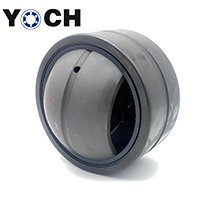
Joint bearings are widely used in various industrial applications due to their ability to handle misalignment and provide smooth motion. However, the effectiveness of these bearings largely depends on the design of their seal groove and seal ring. In this article, we will delve into the critical aspects of designing seal grooves and seal rings for joint bearings, ensuring optimal performance and longevity.
Understanding the Importance of Seal Groove Design
The seal groove plays a crucial role in maintaining the integrity of the joint bearing by preventing the ingress of contaminants and the egress of lubricants. Proper design of the seal groove is essential to ensure effective sealing under different operating conditions.
Key Dimensions to Consider
- Groove Depth: The depth of the seal groove must be carefully calculated to achieve the right amount of compression on the seal ring. Typically, the groove depth should be slightly less than the diameter of the seal ring to ensure proper compression and prevent extrusion.
- Groove Width: The width of the groove should be sufficient to accommodate the seal ring without causing excessive compression or allowing for fluid accumulation. It is generally recommended to keep the groove width such that the fill ratio (the proportion of the groove cross-section occupied by the seal ring) does not exceed 85%.
Avoiding Extrusion and Compression Issues
Extrusion occurs when the seal ring is forced into the clearance gap between moving components, leading to damage and potential failure. To mitigate this risk, the design should consider the pressure conditions and the material properties of the seal ring. Proper compression is also vital; too much compression can lead to accelerated aging and reduced seal life, while too little can result in leaks.
Selecting the Right Seal Ring Material
The choice of seal ring material is a critical factor in the overall performance of the joint bearing. Different materials offer varying degrees of resistance to temperature, pressure, and chemical exposure. Common materials include:
- Nitrile Rubber (NBR): Suitable for applications involving oils and fuels, with a temperature range of -40°C to 120°C.
- Viton®: Offers excellent resistance to high temperatures and aggressive chemicals, making it ideal for demanding environments.
- PTFE (Teflon®): Known for its low friction and high chemical resistance, PTFE is often used in applications requiring a non-stick surface.
Dynamic vs. Static Sealing Applications
The design of the seal groove and seal ring must also take into account whether the application involves dynamic (moving) or static (stationary) sealing. Dynamic seals, such as those in rotating or reciprocating applications, require careful consideration of friction and wear. In contrast, static seals are relatively simpler but still need to account for thermal expansion and pressure differentials.
Dynamic Sealing Considerations
For dynamic applications, the seal ring should be designed to minimize friction while maintaining a tight seal. This often involves selecting materials with low friction coefficients and ensuring that the seal ring is properly lubricated. Additionally, the use of backup rings can help prevent extrusion in high-pressure scenarios.
Static Sealing Considerations
Static seals typically require less complex designs but still need to account for factors such as thermal expansion and the potential for pressure build-up. The seal ring should be designed to maintain a consistent seal under varying temperature and pressure conditions.
Practical Tips for Successful Design
- Surface Finish: The surface finish of the seal groove and mating surfaces can significantly impact seal performance. For dynamic seals, a surface roughness of 10 to 20 microinches is recommended to maintain lubrication.
- Installation: Proper installation of the seal ring is crucial to avoid damage. Ensure that the seal groove is clean and free of debris before installing the seal ring.
- Material Compatibility: Always ensure that the seal ring material is compatible with the fluids and operating conditions of the application.
Conclusion
Designing the seal groove and seal ring for joint bearings is a complex but essential task that requires careful consideration of various factors, including material selection, dimensional accuracy, and application requirements. By following the guidelines outlined in this article, engineers can ensure that their joint bearings achieve optimal sealing performance, leading to increased reliability and longevity in demanding industrial applications.
We are a bearing supplier from China. If you want to learn more about other bearing knowledge, you can watch our YouTube or contact us.