- Welcome to YOCH Bearing!
- 0086-531-85866205
- 0086-16653196205
- market@yochibearing.com

Key Points for Using Spherical Roller Bearings in Heavy-Duty Applications

Troubleshooting Guide for Abnormal Noise in Double-Row Self-Aligning Ball Bearing Motors
23/07/2026
Analysis of High-Speed Operating Performance of Angular Contact Ball Bearings
03/08/2026Spherical roller bearings are essential components in industries that demand exceptional load capacity and misalignment tolerance. When operating under heavy-duty conditions, proper selection, installation, and maintenance become critical to ensuring reliability and extending service life. This article outlines the key considerations for adapting spherical roller bearings to demanding industrial environments.
Understanding Spherical Roller Bearing Design for Heavy Loads
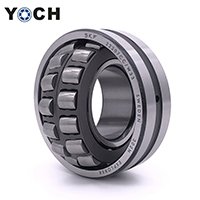
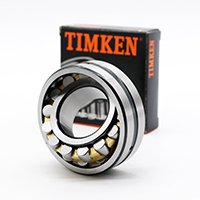
The spherical roller bearing features a unique design with barrel-shaped rollers arranged between an inner ring with two raceways and an outer ring with a common spherical raceway. This configuration allows the bearing to accommodate heavy radial loads and moderate axial loads simultaneously. In heavy-duty applications such as mining equipment, steel mills, and large gearboxes, the bearing’s ability to self-align compensates for shaft deflection and mounting errors, preventing premature failure under extreme stress.
Bearing Selection Criteria for Extreme Load Conditions
Selecting the appropriate bearing for heavy-duty operation requires careful evaluation of load ratings and operating parameters. Engineers must calculate both dynamic and static load capacities to ensure the bearing can withstand peak stresses without excessive deformation. Cage design also matters—brass or steel cages offer superior durability under high loads compared to polyamide alternatives. Additionally, choosing the correct internal clearance prevents thermal expansion issues that commonly arise in continuous heavy-duty cycles.
Proper Bearing Mounting and Installation Techniques
Correct installation directly impacts bearing performance in heavy-duty settings. Always use specialized mounting tools to apply force evenly on the bearing ring being fitted. Avoid direct hammer blows, which can damage raceways and rollers. For interference fits, induction heaters provide controlled, uniform expansion of the inner ring. After mounting, verify radial runout and axial clearance using precision measuring instruments. A poorly mounted bearing will generate excessive heat and vibration, leading to rapid degradation in high-load environments.
Lubrication Management for Bearing Durability
Effective lubrication is the lifeline of any bearing operating under heavy loads. High-base-oil-viscosity greases or oils with extreme-pressure additives form robust films that separate rolling elements from raceways under intense contact stress. Establish regular relubrication intervals based on operating speed, temperature, and contamination levels. In severely dusty or wet conditions, consider sealed or shielded bearing variants to protect lubricant integrity and exclude harmful particles that accelerate wear.
Temperature Monitoring and Bearing System Maintenance
Heavy-duty applications generate significant frictional heat, making temperature monitoring indispensable. Install sensors near bearing housings to detect abnormal thermal spikes that signal insufficient lubrication, overloading, or misalignment. Implement vibration analysis programs to identify early-stage defects such as pitting, cracking, or cage damage. Scheduled inspections should include checking housing fits, seal conditions, and lubricant quality. Proactive maintenance prevents catastrophic failures and unplanned downtime in critical machinery.
Conclusion
Successfully adapting spherical roller bearings to heavy-duty conditions demands attention to design selection, precision installation, optimized lubrication, and continuous monitoring. By following these essential practices, operators can maximize bearing service life and maintain operational efficiency even in the most challenging industrial environments.
We are a bearing supplier from China. If you want to learn more about other bearing knowledge, you can watch our YouTube or contact us.