- Welcome to YOCH Bearing!
- 0086-531-85866205
- 0086-16653196205
- market@yochibearing.com

NSK Linear Guides: Structure and Characteristics
Seal Structure and Waterproof Performance Analysis of Wheel Hub Bearing DAC43790041/38
24/03/2026
FAG Bearing Grease Selection and Replacement Cycle: A Comprehensive Guide
30/03/2026Introduction
NSK linear guides represent a cornerstone of modern precision motion control technology. As a global leader in bearing and motion solutions, NSK has developed linear guide systems that deliver exceptional performance across diverse industrial applications. These precision components enable smooth, accurate linear movement in machinery ranging from CNC equipment to semiconductor manufacturing systems.
Bearing Structure of NSK Linear Guides
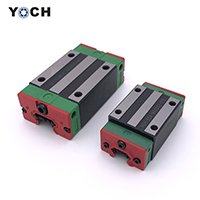
The fundamental architecture of NSK linear guides centers on a sophisticated bearing arrangement that ensures optimal load distribution and motion precision. The system comprises several critical structural elements working in harmony.
The rail component serves as the foundation, manufactured from high-carbon chromium steel through advanced heat treatment processes. This rail features precision-ground raceways that provide the rolling surface for the bearing elements. NSK employs proprietary grinding techniques to achieve surface roughness levels below 0.1 micrometers, ensuring minimal friction and extended service life.
The block assembly houses the recirculating bearing elements, typically precision steel balls or cylindrical rollers depending on the specific series. NSK’s innovative ball recirculation system allows for infinite stroke lengths while maintaining consistent preload characteristics. The block incorporates return caps and end plates that guide the rolling elements through load-bearing zones and back into the circulation path.
Internal to the block, the bearing cage maintains proper spacing between rolling elements, preventing contact-induced friction and ensuring uniform load distribution. NSK utilizes synthetic resin cages in high-speed applications and steel cages for heavy-load conditions, optimizing performance across different operational parameters.
Bearing Preload and Rigidity Characteristics
A defining feature of NSK linear guides is the adjustable bearing preload system that directly influences rigidity and positioning accuracy. NSK offers multiple preload classes ranging from light preloads (Z0) suitable for smooth motion applications to heavy preloads (Z3) designed for high-rigidity machining centers.
The preload mechanism works by creating intentional internal stress within the bearing contact zones, eliminating clearance between rolling elements and raceways. This preloading significantly enhances system stiffness, reducing elastic deformation under external loads by up to 300% compared to clearance-fit configurations.
NSK’s proprietary “DF” (Face-to-Face) arrangement of bearing contact angles optimizes moment load resistance. This configuration provides uniform rigidity in all directions, making these guides particularly suitable for applications involving complex loading conditions or multi-axis motion systems.
Bearing Sealing and Contamination Protection
Environmental protection represents a critical design consideration in NSK linear guide bearing systems. The company employs multi-layer sealing technologies that extend operational life in contaminated industrial environments.
Standard equipment includes double-lip end seals manufactured from specialized synthetic rubber compounds resistant to cutting fluids, lubricating oils, and industrial chemicals. These seals maintain contact pressure against the rail surface while minimizing drag resistance, achieving IP65 protection levels in standard configurations.
For extreme environments, NSK offers optional metal scrapers and labyrinth seals that provide additional protection against coarse contaminants such as metal chips and abrasive particles. The bearing blocks feature internal lubrication reservoirs that maintain consistent oil film thickness on raceway surfaces, reducing wear rates and extending maintenance intervals.
Bearing Material Technology and Heat Treatment
NSK leverages advanced metallurgical expertise in linear guide bearing component manufacturing. Rail and block materials undergo through-hardening processes achieving surface hardness of 58-64 HRC, with core hardness maintained at 45-55 HRC to ensure structural integrity under impact loads.
The company applies specialized surface treatments including black chrome plating and low-temperature black oxide coating to enhance corrosion resistance. These surface modifications extend service life in humid or chemically aggressive environments without compromising dimensional precision.
For specialized applications, NSK offers stainless steel variants utilizing martensitic precipitation-hardening grades that combine corrosion resistance with bearing-grade hardness. These materials prove essential in food processing equipment, medical devices, and cleanroom manufacturing systems.
Bearing Load Capacity and Life Calculation
NSK linear guides demonstrate exceptional bearing load capacity characteristics derived from optimized contact geometry and material properties. The basic dynamic load rating (C) and basic static load rating (C0) follow ISO 14728-1 standards, enabling accurate life predictions using modified bearing life equations.
The company provides comprehensive life calculation methodologies accounting for variable loading conditions, lubrication quality, and contamination factors. NSK’s proprietary life adjustment factors incorporate actual field data, providing more accurate predictions than standard bearing life formulas.
For applications involving moment loads, NSK specifies equivalent load calculations that consider pitch, yaw, and roll moments simultaneously. This multi-axis loading capability distinguishes NSK guides from conventional bearing systems limited to simple radial or axial loads.
Bearing Accuracy Grades and Precision Options
NSK manufactures linear guides in multiple bearing accuracy classes to match application requirements. Standard accuracy grades include normal (N), high (H), precision (P), super precision (SP), and ultra precision (UP), with running parallelism tolerances ranging from 12 micrometers to 1 micrometer per meter.
The highest precision grades achieve positioning repeatability within ±0.1 micrometers, meeting the exacting demands of semiconductor lithography equipment and precision measurement systems. NSK’s manufacturing processes incorporate in-process gauging and temperature-controlled grinding to maintain these tight tolerances.
Preload selection interacts with accuracy grade to determine final system performance. High-precision applications typically employ light preloads to minimize starting friction while maintaining positioning accuracy, while heavy cutting applications prioritize rigidity over absolute precision.
Conclusion
NSK linear guides embody decades of bearing technology advancement, delivering precision motion control solutions across industrial sectors. The integration of advanced materials, precision manufacturing, and innovative sealing technologies positions these components as essential elements in modern automated machinery. Understanding the structural characteristics and bearing design principles enables engineers to optimize linear motion systems for specific application requirements, balancing performance, longevity, and cost considerations.
We are a bearing supplier from China. If you want to learn more about other bearing knowledge, you can watch our YouTube or contact us.