- Welcome to YOCH Bearing!
- 0086-531-85866205
- 0086-16653196205
- market@yochibearing.com

Performance Advantages and Application Scenarios of Spherical Roller Bearings Under Heavy-Duty Conditions

Causes and Improvement Methods of Bearing Vibration Abnormality in High-Speed Rotating Equipment
15/05/2026
Insulation design of motor-specific bearings to avoid risks of electrical corrosion damage
25/05/2026In modern industrial machinery, components operating under heavy-duty conditions require bearings that can withstand extreme loads, accommodate misalignment, and maintain reliable performance over extended service life. Spherical roller bearings have emerged as a critical solution for such demanding applications, offering unique structural and functional advantages that make them indispensable in industries ranging from mining and metallurgy to wind energy and marine engineering.
1. Structural Design of the Bearing
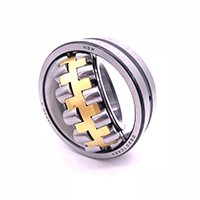
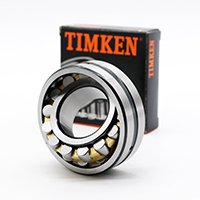
The spherical roller bearing derives its name from the spherical geometry of its outer ring raceway. This distinctive design features two rows of barrel-shaped rollers that are self-aligning, allowing the bearing to accommodate angular misalignment between the shaft and housing. The symmetrical roller arrangement, combined with optimized cage designs, ensures even load distribution across the rolling elements. Under heavy-duty conditions, this structural characteristic becomes particularly valuable, as it compensates for mounting errors, shaft deflection, and housing deformation that are common in high-load industrial environments. The robust construction of the bearing enables it to handle both radial loads and substantial axial loads simultaneously.
2. Superior Load-Carrying Capacity of the Bearing
One of the most significant performance advantages of spherical roller bearings in heavy-duty applications is their exceptional load-carrying capacity. The dual-row roller configuration effectively doubles the contact surface area compared to single-row designs, enabling the bearing to support substantially higher radial loads. In applications such as vibrating screens, crushers, and rolling mills, where equipment must process massive material volumes continuously, the bearing’s ability to manage dynamic and static load ratings far exceeding those of standard ball bearings proves critical. Additionally, specialized heavy-duty variants feature larger rollers and optimized internal geometries, further enhancing the bearing’s capacity to sustain extreme operational stresses without premature fatigue.
3. Self-Aligning Capability of the Bearing
Heavy-duty machinery often operates in harsh environments where perfect shaft alignment is difficult to achieve and maintain. The self-aligning feature of spherical roller bearings addresses this challenge effectively. The spherical outer ring raceway permits angular misalignment of up to 1.5 to 2.5 degrees, depending on the specific bearing series. This capability is particularly beneficial in applications such as conveyor systems, paper mill dryers, and large industrial gearboxes, where thermal expansion, structural flexing, or foundation settling may introduce alignment deviations. By accommodating these misalignments without generating excessive edge stresses, the bearing significantly reduces the risk of localized wear and extends overall service intervals.
4. Enhanced Durability and Fatigue Resistance of the Bearing
Operating under heavy-duty conditions subjects bearings to severe cyclic stresses that can lead to material fatigue and surface distress. Spherical roller bearings are engineered with advanced material technologies and heat treatment processes to combat these failure modes. High-carbon chromium steel, often with specialized surface treatments, provides excellent hardness and wear resistance. Furthermore, modern manufacturing techniques ensure precise roller profiles and raceway geometries that minimize stress concentrations. In continuous casting machines and industrial fans, where downtime is extremely costly, the superior fatigue resistance of the bearing translates to longer maintenance cycles, reduced total cost of ownership, and improved equipment availability.
5. Effective Sealing and Lubrication Solutions for the Bearing
Proper lubrication is essential for bearing performance under heavy loads and elevated temperatures. Spherical roller bearings are available with integrated sealing solutions that protect against contamination ingress while retaining lubricant. Labyrinth seals, rubber contact seals, and advanced grease retention designs ensure that the bearing operates with clean, adequate lubrication even in dusty, wet, or chemically aggressive environments. For heavy-duty applications in mining, cement production, and steel manufacturing, these sealing configurations prevent abrasive particles from compromising the bearing’s rolling contact surfaces, thereby preserving load capacity and preventing catastrophic premature failures.
6. Key Application Scenarios for the Bearing
The versatility of spherical roller bearings makes them suitable for a broad spectrum of heavy-duty industrial applications. In the mining sector, they are extensively used in jaw crushers, cone crushers, and vibrating grizzly feeders, where shock loads and continuous operation are the norm. The metallurgical industry relies on these bearings in rolling mill stands, continuous casters, and coiler drums that must sustain immense rolling forces. Wind turbine main shafts and gearboxes utilize large spherical roller bearings to handle variable wind loads and support massive rotor weights. In the marine industry, propulsion shaft bearings and deck machinery employ these components to withstand corrosive environments and heavy mechanical stresses. Additionally, pulp and paper processing equipment, power generation turbines, and construction machinery all benefit from the robust performance characteristics that spherical roller bearings deliver under demanding operational conditions.
7. Conclusion
Spherical roller bearings represent an optimal bearing solution for heavy-duty industrial applications where reliability, load capacity, and misalignment tolerance are paramount. Their unique structural design, combined with advanced material and sealing technologies, enables them to perform consistently in the most challenging environments. As industrial machinery continues to evolve toward higher productivity and efficiency requirements, the strategic selection and proper maintenance of spherical roller bearings will remain essential for maximizing equipment uptime and operational profitability across diverse heavy-duty sectors.
We are a bearing supplier from China. If you want to learn more about other bearing knowledge, you can watch our YouTube or contact us.