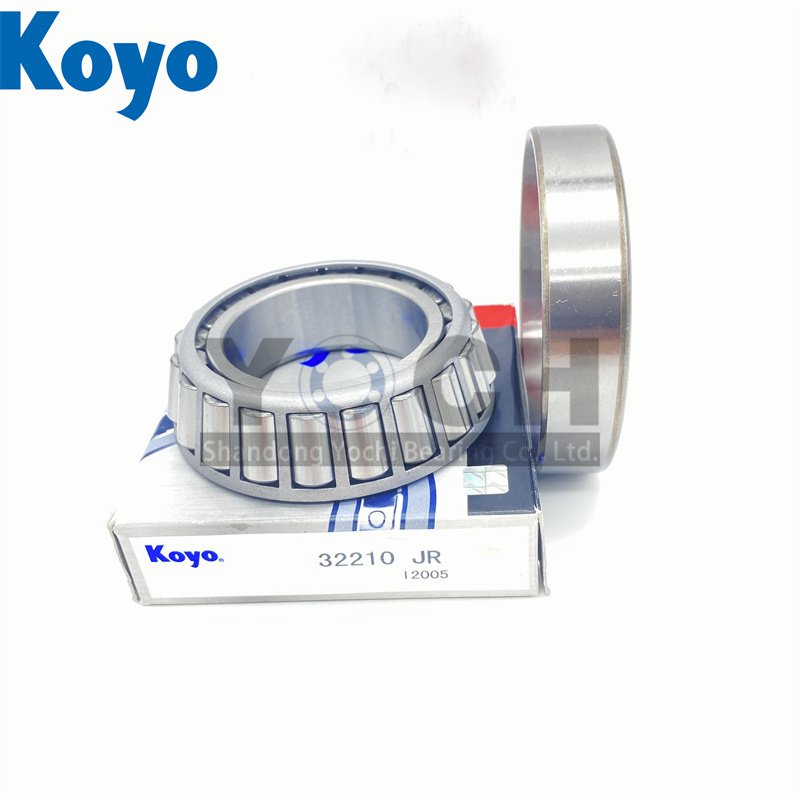
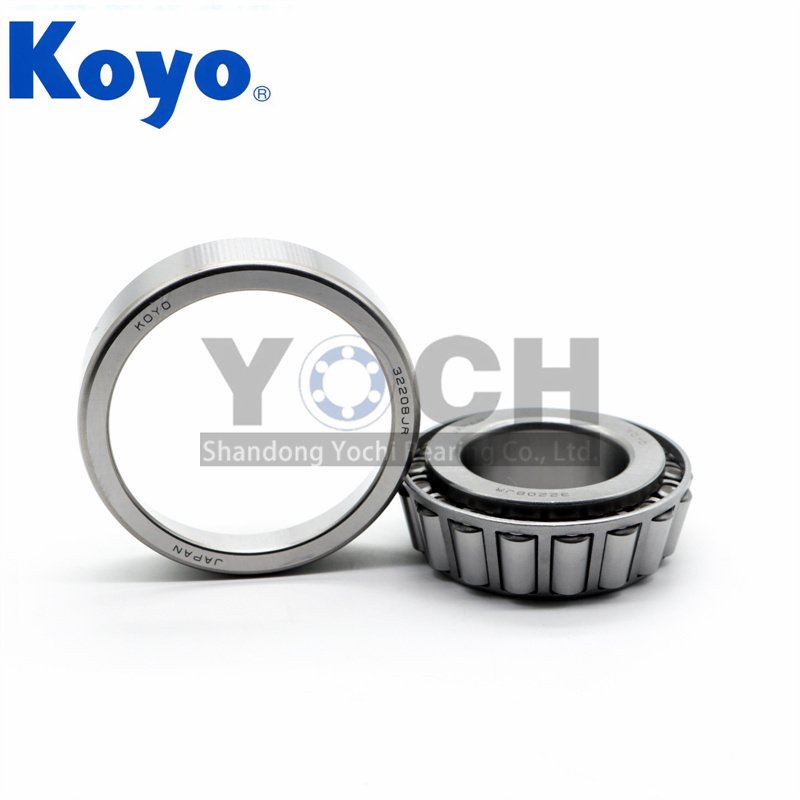
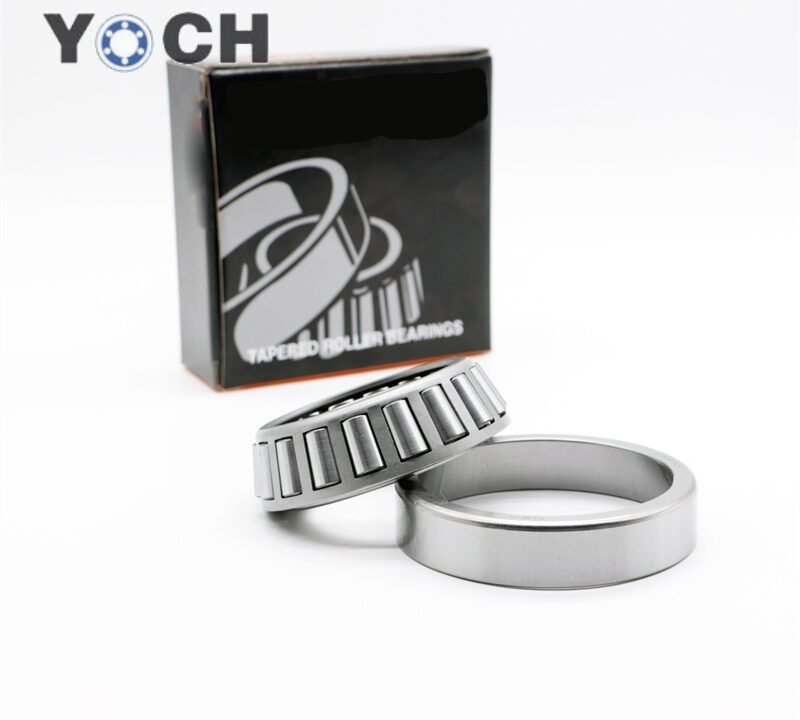
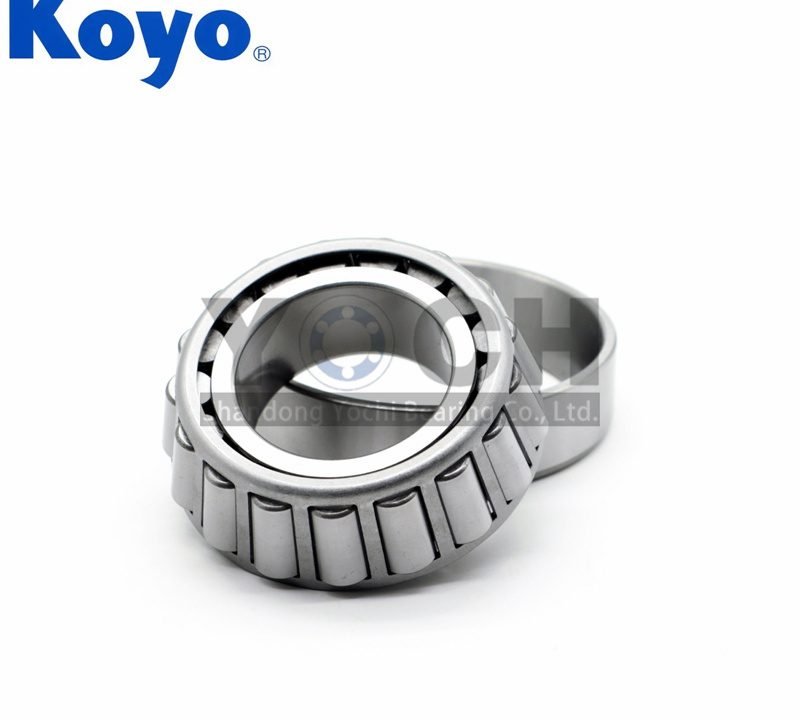
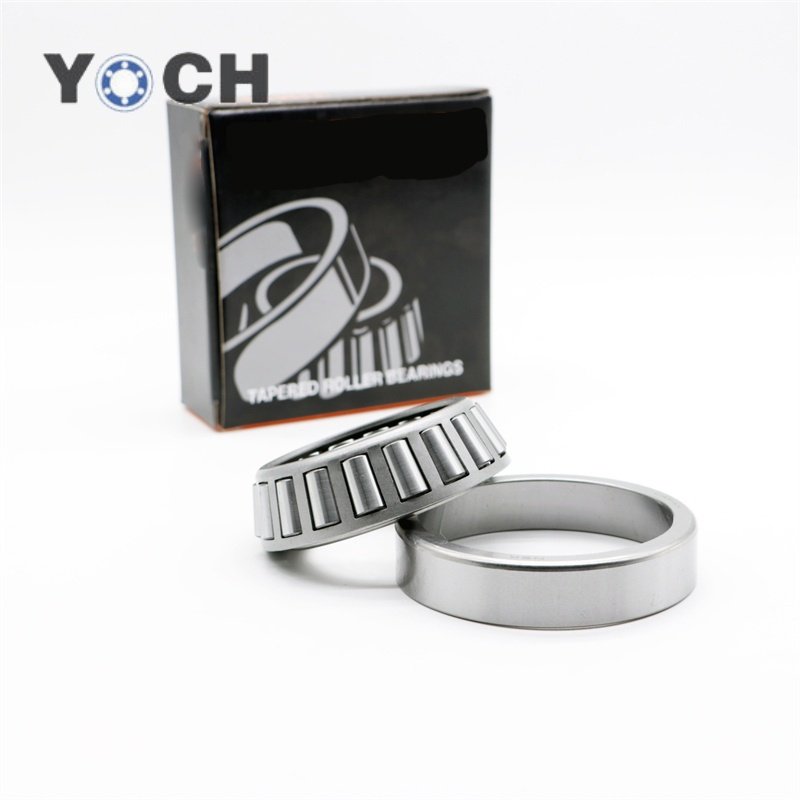
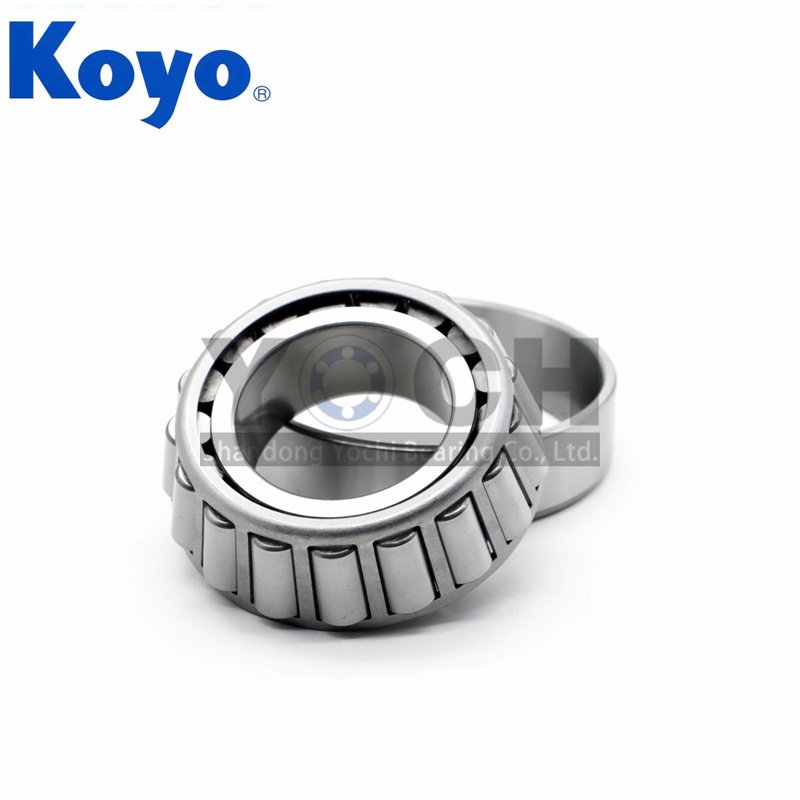
High Precision KOYO HM220149/HM220110 Inch Tapered Roller Bearing
26/01/2024KOYO Professional Supplier Bering H924045/H924010 Inch Tapered Roller Bearing
26/01/2024
How to install tapered roller bearings?
Adjusting axial clearance For the installation of tapered roller bearing axial clearance can be adjusted by adjusting nuts on the journal, adjusting gaskets and threads in the bearing seat hole, or by pre-tightening springs and other methods. The size of axial clearance is related to the arrangement of bearing installation, the distance between bearings, the material of shaft and bearing seat, and can be determined according to working conditions.
For tapered roller bearings with high load and high speed, the influence of temperature rise on axial clearance must be considered when adjusting clearance, and the reduction of clearance caused by temperature rise must be estimated. That is to say, the axial clearance should be properly adjusted to a larger extent.
For bearings with low speed and bearing vibration, no-clearance installation should be adopted, or pre-load installation should be applied. The purpose is to make the tapered roller bearing roller and raceway have good contact, uniform load distribution, prevent the roller and raceway from vibration impact damage. After adjustment, the size of axial clearance is tested with a micrometer.
Structure:
This type of bearing is equipped with a round platform roller, the roller by the inner ring of the large rim.
Single row bearings can bear radial load and unidirectional axial load, and double row bearings can bear radial load and bidirectional axial load.Suitable for bearing heavy load and shock load.
According to the different contact Angle (α), it can be divided into three types: small cone Angle, middle cone Angle and large cone Angle. The larger the contact Angle is, the greater the axial load capacity is.
Outer ring and inner assembly (inner ring and roller and cage assembly) can be separated for easy assembly and disassembly.
A single-row tapered bearing is usually adequate for the most straightforward applications (e.g., angular forces on a fixed point and with only mild fluctuation). To find the right one, you'll need to determine whether the end-use of the tapered bearing will have more radial or axial loads. There are axial-only tapered roller bearings called thrust tapered bearings that resemble flat rings or disks where the rollers are perpendicular to the bearing bore axis. When multiple bearings are required, it could be advantageous to use two- or more single-row tapered bearings rather than multi-row bearings within a single housing. One such example is if one bearing will need to be maintained, adjusted, or replaced separately from the other. Another is when there is a need to allow for flexibility in design and add or subtract individual single-row tapered bearings, which is impossible with a multi-row tapered bearing.