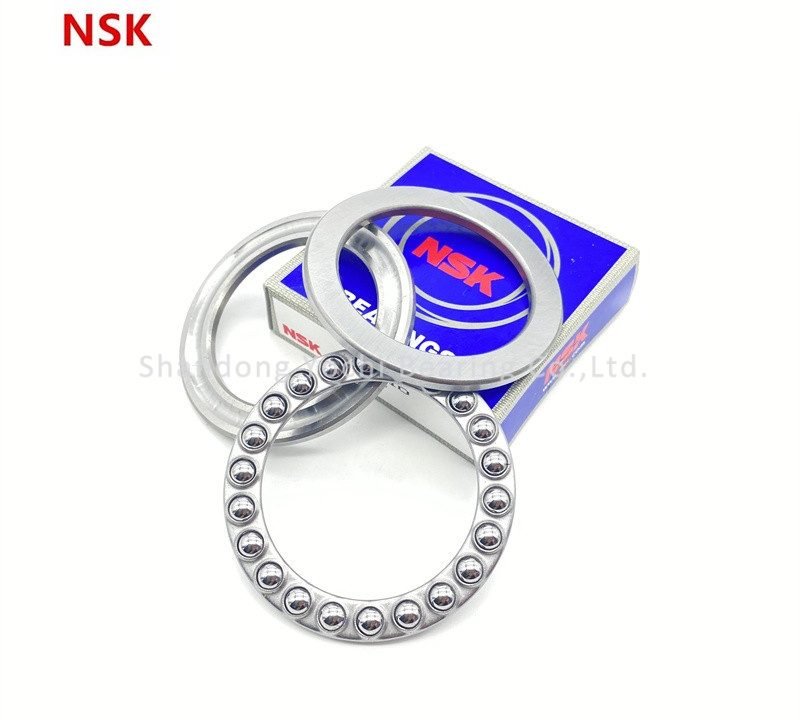
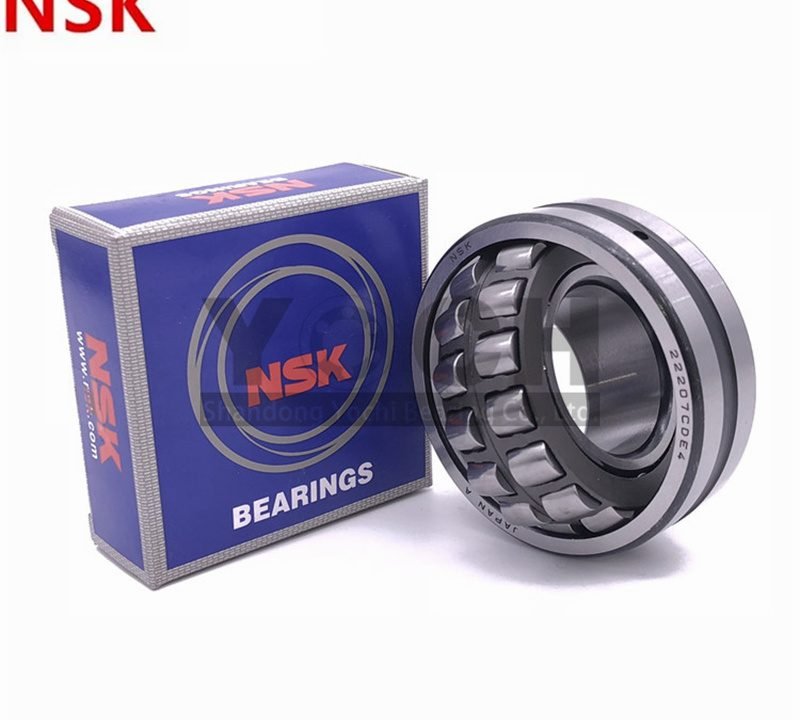
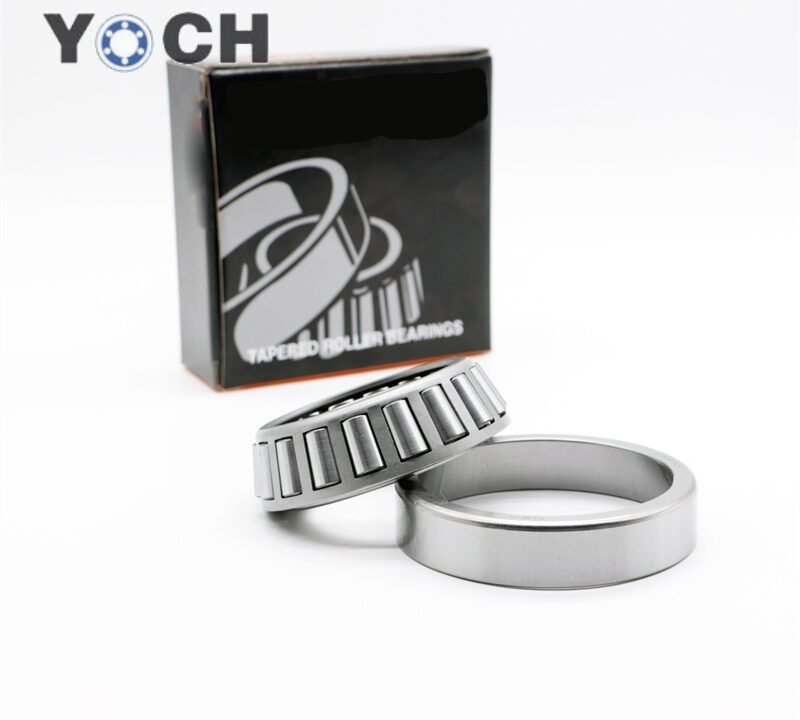
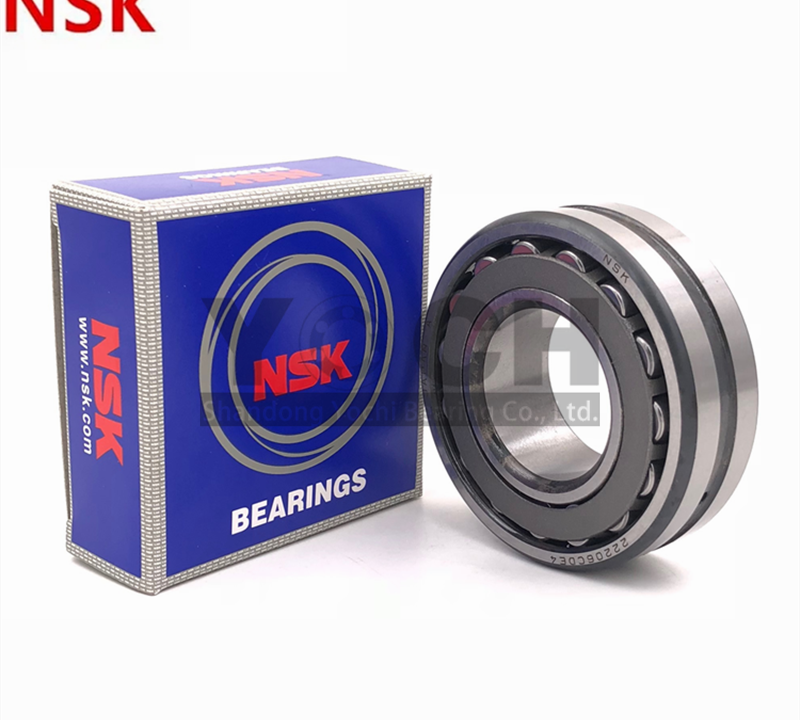
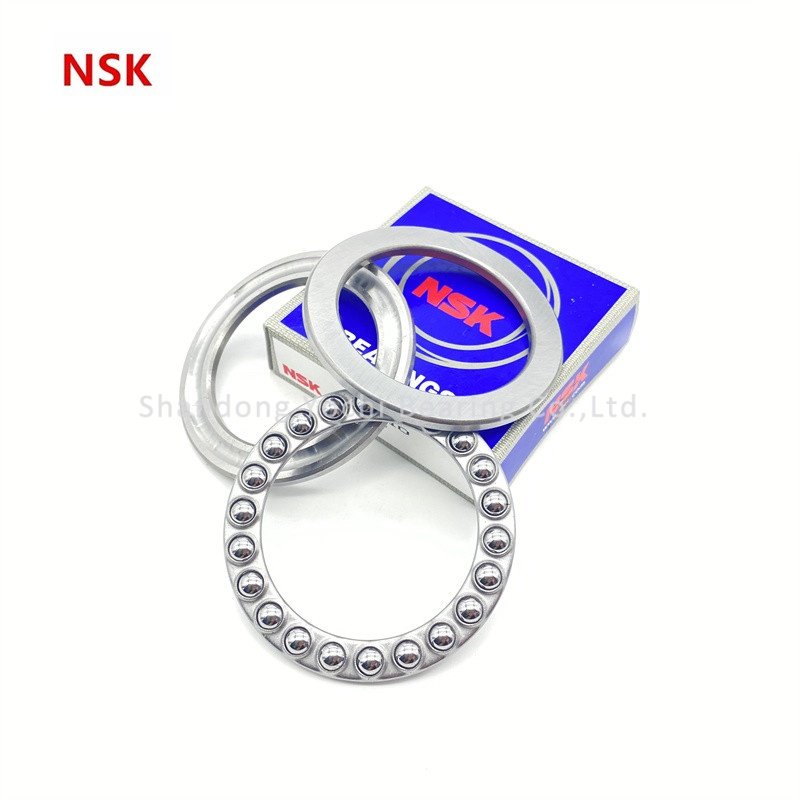
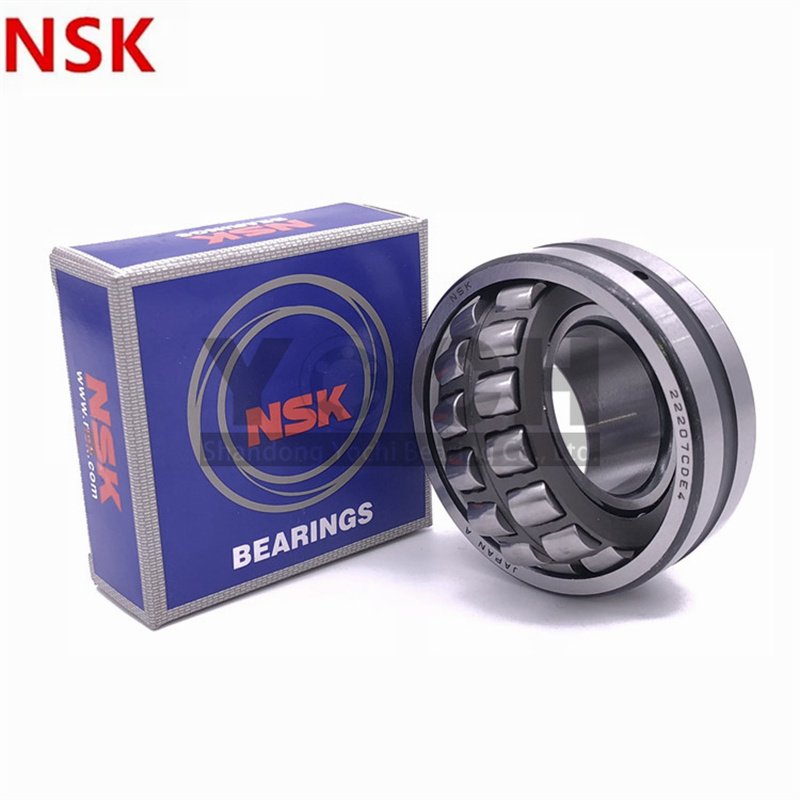
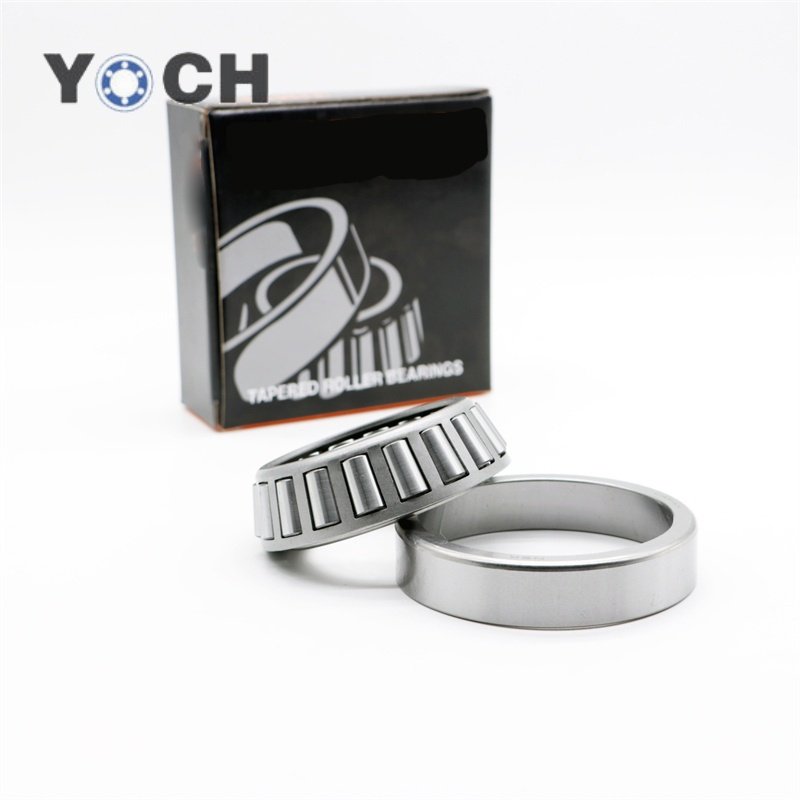
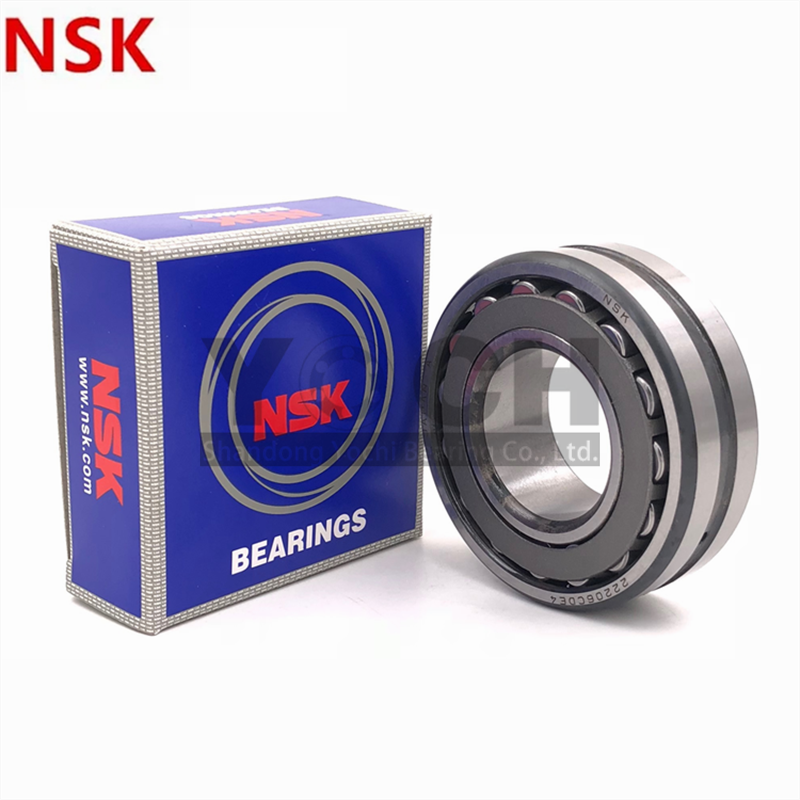
The inner hole of the self-aligning roller bearing has two kinds: cylindrical and conical, and the taper of the conical cone hole is 1:30 and 1:12. This kind of conical inner hole bearing is equipped with a tight sleeve or a disconnecting sleeve, so that the self-aligning ball bearing with the conical inner hole can be conveniently and quickly assembled on the optical shaft or the stepped machine shaft.
Main uses:Paper making machinery, reducer, railway vehicle axle, rolling mill gearbox bearing seat, rolling mill roller, crusher, vibrating screen, printing machinery, woodworking machinery, all kinds of industrial reducer, vertical self-aligning bearing with seat.
The spherical roller bearing has a double row of rollers, with one common spherical raceway in the outer ring and two raceway in the inner ring and inclined at an Angle relative to the bearing axis. This ingenious structure makes it self-aligning, so it is not easy to be affected by the Angle of shaft and bearing box on the error or shaft bending, suitable for installation error or shaft deflection caused by Angle error. The bearing can bear radial load as well as bidirectional axial load.
Bearing rings and rolling elements can be made of a number of different materials, but the most common is "chrome steel", (high carbon chromium) a material with approximately 1.5% chrome content. Such "chrome steel" has been standardized by a number of authorities, and there are therefore a number of similar materials, such as: AISI 52100 (USA), 100CR6 (Germany), SUJ2 (Japan) and GCR15 (China).
Some common materials for bearing cages:
Sheet steel (stamped or laser-cut)
Polyamide (injection molded)
Brass (stamped or machined)
Steel (machined)
The choice of material is mainly done by the manufacturing volume and method. For large-volume bearings, cages are often of stamped sheet-metal or injection molded polyamide, whereas low volume manufacturers or low volume series often have cages of machined brass or machined steel. For some specific applications, special material for coating (e.g. PTFE coated cylindrical bore for vibratory applications) is adopted.
Most spherical roller bearings are designed with two rows of rollers, allowing them to take very heavy radial loads and heavy axial loads. There are also designs with one row of rollers, suitable for lower radial loads and virtually no axial load. These are also called "barrel roller bearings" or "Tonnenlager" and are typically available in the 202- and 203-series.
The internal design of the bearing is not standardised by ISO, so it varies between different manufacturers and different series. Some features that may or may not exist in different bearings are:
Lubrication features in inner or outer ring
Central flange
Guide ring or center ring
Integrated seals
Cage