- Welcome to YOCH Bearing!
- 0086-531-85866205
- 0086-16653196205
- market@yochibearing.com

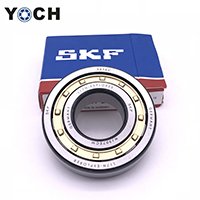
SKF Cylindrical Roller Bearing Temperature Anomaly Troubleshooting and Resolution
Deep Groove Ball Bearing Clearance Classification: A Complete Guide
29/12/2025Causes, Symptoms and Handling of SKF Abnormally High Operating Temperature
05/01/2026SKF cylindrical roller bearings are critical components in industrial machinery, and temperature anomalies can indicate serious operational issues. This comprehensive guide explores the root causes of abnormal temperature rise and provides systematic troubleshooting procedures to ensure optimal bearing performance and extended service life.
Bearing Temperature Monitoring Fundamentals
Understanding normal operating temperatures is crucial for effective bearing maintenance. SKF cylindrical roller bearings typically operate between 30-70°C above ambient temperature, depending on application conditions. Temperature monitoring should be continuous, using infrared thermometers or embedded sensors at the bearing outer ring location. Any sustained temperature increase exceeding 20°C above baseline warrants immediate investigation.
Common Bearing Temperature Elevation Causes
Inadequate Lubrication Conditions
Insufficient or contaminated lubricant is the primary cause of bearing overheating. Check lubricant levels, viscosity grade, and contamination indicators. SKF recommends specific lubrication intervals based on operating conditions – failure to follow these guidelines results in metal-to-metal contact, generating excessive heat. Perform oil analysis to detect water contamination, oxidation, or wrong lubricant type.
Excessive Bearing Preload or Misalignment
Improper mounting creates excessive preload or misalignment, forcing bearing components to work harder. Use SKF’s mounting guidelines with proper tools and measurement techniques. Check shaft and housing tolerances, ensuring they meet SKF specifications. Misalignment exceeding 0.05° can increase operating temperature by 15-20°C.
Contamination and Particle Ingress
Foreign particles entering the bearing cavity create abrasive conditions and block lubricant flow. Inspect seals and shields for damage, ensuring proper installation. Environmental contamination from dust, moisture, or process materials accelerates wear and heat generation. Implement proper sealing solutions based on SKF’s contamination severity scale.
Systematic Bearing Diagnostic Procedures
Vibration Analysis Techniques
Advanced vibration monitoring reveals bearing defects before temperature rise becomes critical. Use SKF’s enveloped acceleration technique to detect early-stage damage. Frequency analysis identifies specific defect types: outer race defects (BPFO), inner race defects (BPFI), and roller element defects (BSF). Temperature rise often correlates with vibration amplitude increases.
Thermal Imaging Inspection
Infrared thermography provides visual bearing temperature distribution maps. Hot spots indicate specific problem areas: overloaded zones, lubrication starvation points, or mounting irregularities. Compare thermal patterns with baseline images to identify progressive deterioration. SKF’s thermal analysis software helps interpret results and predict remaining service life.
Corrective Actions for Bearing Temperature Issues
Lubrication System Optimization
Implement SKF’s automatic lubrication systems for consistent bearing supply. Select correct lubricant based on speed factor (ndm value) and operating temperature range. For high-temperature applications above 100°C, use synthetic lubricants with appropriate additives. Establish lubrication schedules based on actual operating conditions rather than generic time intervals.
Bearing Replacement Protocols
When bearing damage is confirmed, follow SKF’s replacement procedures meticulously. Clean housing and shaft thoroughly, checking for fretting corrosion or damage. Use proper heating methods for inner ring mounting – induction heaters prevent localized overheating. Apply correct mounting force using SKF’s hydraulic methods to avoid preload errors.
System-Level Modifications
Address root causes beyond the bearing itself. Improve ventilation around bearing housings, install cooling fans for high-speed applications. Verify coupling alignment and balance rotating components. Consider upgrading to SKF Explorer class bearings for higher temperature tolerance and longer service life in demanding conditions.
Preventive Maintenance Strategies
Establish comprehensive bearing condition monitoring programs combining temperature, vibration, and lubricant analysis. Document baseline conditions during initial operation for comparison. Train maintenance personnel on SKF’s mounting and maintenance procedures. Stock critical spare bearings and maintain proper storage conditions to prevent pre-service deterioration.
Implementing these systematic approaches ensures SKF cylindrical roller bearings operate within optimal temperature ranges, maximizing equipment reliability and minimizing unplanned downtime. Regular monitoring and proactive maintenance based on these guidelines will significantly extend bearing service life and reduce overall operational costs.