- Welcome to YOCH Bearing!
- 0086-531-85866205
- 0086-16653196205
- market@yochibearing.com

What Are Our Concerns About Bearings(4)

What Are Our Concerns About Bearings(3)
02/12/2021
What Are Our Concerns About Bearings(5)
03/12/2021Q1:62226 Bearing model meaning?
A:The last two numbers 26 represent the bearing inner diameter of 26X5 =130
The second and third numbers 22 represent the load of the bearing, which can also be said to be the height of 0, 2, 3, 4, 22, 22
6 represents the type of deep groove ball bearing .
Q2:What is the meaning of the English naming of various bearings?
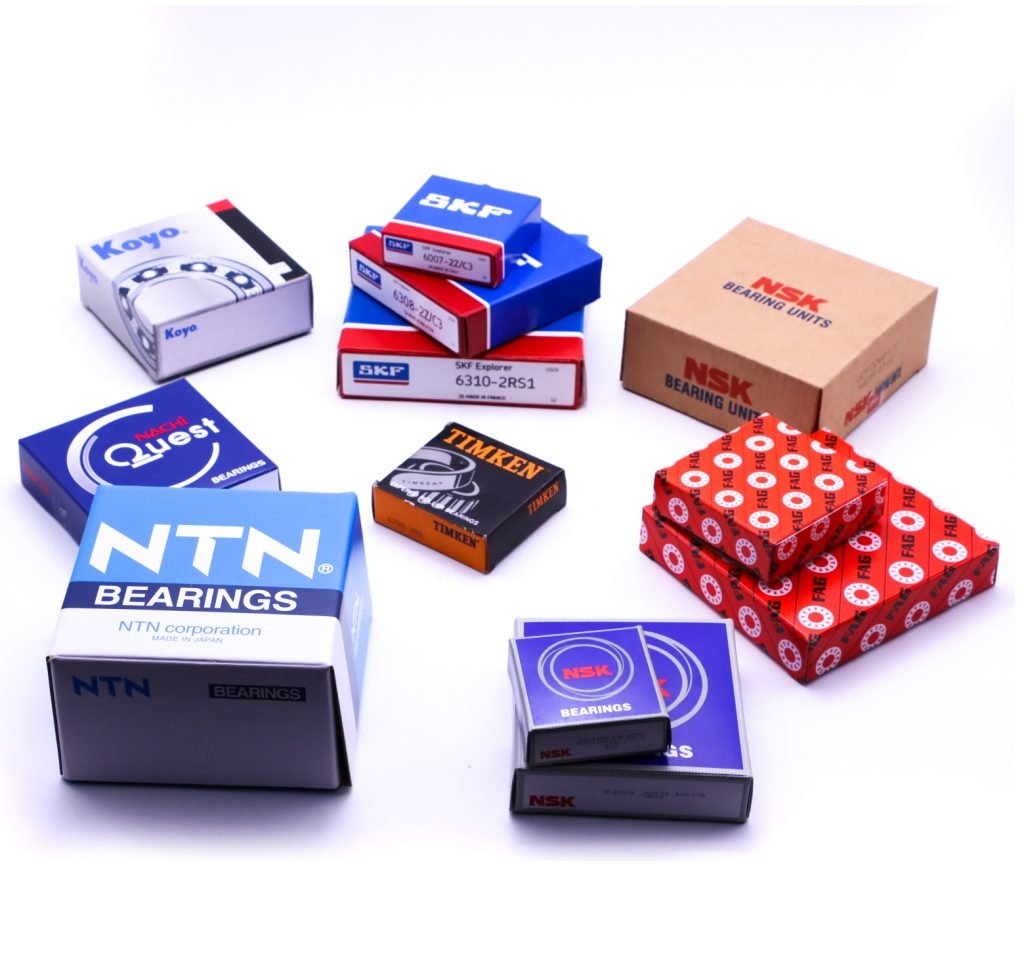
A: NU– Cylindrical roller bearing with outer ring and double flange and inner ring without flange
NUP — cylindrical roller bearing with double outer rim and single inner rim and flat retaining ring
RNU — Cylindrical roller bearing without inner ring
RN — Cylindrical roller bearing without outer ring
NNU — it’s the same thing as NU, except it’s diallel
NJ — Cylindrical roller bearing with double outer rim and single inner rim without flat retaining ring
Post code
E – reinforced
M — Copper cage
Q3:What do the letters and numbers before and after the bearing model stand for?
1. Basic code imported bearings
A basic code used to show the bearing diameter, diameter series, width series and type, generally five digits, first described as follows:
1) Bearing inner diameter is represented by basic code number one from the right and H digit. For the common inner diameter d=20 ~ 480mm bearing inner diameter is generally a multiple of 5, these two numbers represent the bearing inner diameter size divided by 5 quotient, such as 04 represents D = 20mm; 12 means d = 60mm and so on. For bearings with inner diameters of 10mm, 12mm, 15mm and 17mm, the inner diameters are 00, 01, 02 and 03 respectively. For bearings with inner diameter less than 10mm and greater than 500mm, the inner diameter expression method is otherwise stipulated, which can be referred to GB/T272-93.
2) The diameter series of bearings (that is, the bearing with the same structure and the same inner diameter changes in the outer diameter and width series) are represented by the third digit from the right of the basic code. For example, for centripetal bearings and centripetal thrust bearings, 0 and 1 represent extra-light series; 2 indicates light series; 3 indicates the medium series. 4 indicates the repeated series. The size pairs between the series are shown in the figure below. In addition to 1, the thrust bearing is the same as the centripetal bearing.
3) The width series of bearings (that is, the change series of bearing width with the same structure, inner diameter and diameter series) is represented by the fourth digit from the right of the basic code. When the width series as shown in Figure 13-4 is listed as series 0 (normal series), the width series code O can not be marked in the code for most bearings, but for self-aligning roller bearings and tapered roller bearings, the width series code 0 should be marked.
Diameter series code and width series code collectively referred to as size series code.
4) Bearing type codes are represented by the fifth digit from the right of the basic code (for cylindrical roller bearings and needle roller bearings and other types of codes are letters).
2. Post code
Bearing postcode is to use letters and numbers to express the bearing structure, tolerance and special requirements of materials, etc. Postcode is a lot of content, here are a few commonly used code.
1) The internal structure code refers to the different internal structure of the same type of bearing, which is represented by letters followed by the basic code. For example, angular contact ball bearings with contact angles of 15°, 25° and 40° are denoted by C, AC and B respectively.
2) The tolerance grade of bearings is divided into class 2, class 4, class 5, class 6, class 6X and class 0, a total of 6 grades, successively from high to low, and its codes are/PZ, / P4 ‘/ PS, / P6, / P6X and/PO respectively. In the tolerance class, class 6X is only applicable to tapered roller bearings; Grade 0 is general grade and is not marked in the wheel bearing code.
3) The commonly used radial clearance series of bearings are divided into 6 groups, namely group 1, group 2, group 0, group 3, group 4 and group 5. The radial clearance is successively from small to large. O group clearance is a commonly used clearance group, which is not marked in the bearing code, and the other clearance groups are respectively represented by/CI, / CZ, / C3, / C4 and/CS in the bearing code.
3. Front code
Bearing prefix code used to represent bearing parts, with letters. For example, L represents the separable ring of the separable bearing; K represents the rolling body and cage components of bearings, etc.
Q4:What is the meaning of bearing model 926749/926710?

A:Bearing name TIMKENHM926749 bearing
The new model HM926749
Old model HM 926749 / HM 926710
Inner diameter D (mm) 127.7925
Outer diameter D (mm) 228.6000
Thickness B (mm) 53.9750
TIMKEN model HM926749
Inch tapered roller bearings.
Q5:The meaning of bearing types and bearing models?
A:Rolling bearing: A bearing that rolls between supporting loads and parts that move relative to each other, including parts with raceways and rolling groups with or without isolation or parts. It can be used to withstand radial, axial or combined radial and axial loads.
Angular contact bearing: rolling bearing in which the nominal contact Angle between the ball and the ring is greater than 0° and less than 90°.
Outer spherical bearing: a centripetal rolling bearing having an outer sphere and a wide inner ring with a locking element. Mainly used for simple enclosures.
Linear bearing: a rolling bearing in which two raceways have relative linear motion in the rolling direction.
Ball bearing: The rolling body is the rolling bearing of the ball.
Deep groove ball bearings: Centripetal ball bearings in which each ring has a continuous groove raceway with a cross section approximately one third of the circumference of the ball.
Thrust ball bearing: The rolling body is the thrust rolling bearing of the ball.
Roller bearing: A roller is a rolling bearing of rollers.
Cylindrical roller bearing: The rolling body is a cylindrical roller bearing.
Tapered roller bearing: the rolling body is a centripetal rolling bearing of tapered roller.
Needle roller bearing: The rolling body is a centripetal rolling bearing of needle roller.
Spherical roller bearing: The roller is a self-aligning centripetal roller bearing with convex spherical or concave rollers. A bearing with convex spherical rollers having a spherical raceway on the outer ring; A bearing with concave rollers having a spherical raceway in the inner ring.
Thrust roller bearing: The roller is the thrust roller bearing of the roller.
Thrust cylindrical roller bearing: The roller is the thrust roller bearing of cylindrical roller.
Thrust tapered roller bearing: The rolling body is the thrust rolling bearing of tapered roller.
Thrust needle roller bearing: The rolling body is a thrust rolling bearing for needle rolling.
Thrust spherical roller bearing: the rolling body is a self-aligning thrust roller bearing with convex spherical or concave rollers. The raceway of the bearing seat ring with convex spherical roller is spherical, and the raceway of the bearing shaft ring with concave spherical roller is spherical.
Seat bearing: An assembly of a centripetal bearing and seat with a base plate for mounting screws on a supporting surface parallel to the bearing axis line.
Joint bearing: spherical sliding contact surface, mainly suitable for swing motion, tilt motion and rotary motion spherical sliding bearing.
Combined bearing: a rolling bearing in a set of bearings combined by two or more of the above bearing structures at the same time. Such as needle roller and thrust cylindrical roller combined bearings, needle roller and thrust ball combined bearings, needle roller and angular contact ball combined bearings, etc.
Other bearings: rolling bearings of other constructions other than those mentioned above.
1. Basic code imported bearings
A basic code used to indicate the bearing diameter, diameter series, width series and type, generally five digits, first described as follows:
1) Bearing inner diameter is represented by basic code number one from the right and H digit. For the common inner diameter d=20 ~ 480mm bearing inner diameter is generally a multiple of 5, these two numbers represent the bearing inner diameter size divided by 5 quotient, such as 04 represents D = 20mm; 12 means d = 60mm and so on. For bearings with inner diameters of 10mm, 12mm, 15mm and 17mm, the inner diameters are 00, 01, 02 and 03 respectively. For bearings with inner diameter less than 10mm and greater than 500mm, the inner diameter expression method is otherwise stipulated, which can be referred to GB/T272-93.
2) The diameter series of bearings (that is, the bearing with the same structure and the same inner diameter changes in the outer diameter and width series) are represented by the third digit from the right of the basic code. For example, for centripetal bearings and centripetal thrust bearings, 0 and 1 represent extra-light series; 2 indicates light series; 3 indicates the medium series. 4 indicates the repeated series. The size pairs between the series are shown in the figure below. In addition to 1, the thrust bearing is the same as the centripetal bearing.
3) The width series of bearings (that is, the change series of bearing width with the same structure, inner diameter and diameter series) is represented by the fourth digit from the right of the basic code. When the width series as shown in Figure 13-4 is listed as series 0 (normal series), the width series code O can not be marked in the code for most bearings, but for self-aligning roller bearings and tapered roller bearings, the width series code 0 should be marked.
Diameter series code and width series code collectively referred to as size series code.
4) Bearing type codes are represented by the fifth digit from the right of the basic code (for cylindrical roller bearings and needle roller bearings and other types of codes are letters).
2. Post code
Bearing postcode is to use letters and numbers to express the bearing structure, tolerance and special requirements of materials, etc. Postcode is a lot of content, here are a few commonly used code.
1) The internal structure code refers to the different internal structure of the same type of bearing, which is represented by letters followed by the basic code. For example, angular contact ball bearings with contact angles of 15°, 25° and 40° are denoted by C, AC and B respectively.
2) The tolerance grade of bearings is divided into class 2, class 4, class 5, class 6, class 6X and class 0, a total of 6 grades, successively from high to low, and its codes are/PZ, / P4 ‘/ PS, / P6, / P6X and/PO respectively. In the tolerance class, class 6X is only applicable to tapered roller bearings; Grade 0 is general grade and is not marked in the wheel bearing code.
3) The commonly used radial clearance series of bearings are divided into 6 groups, namely group 1, group 2, group 0, group 3, group 4 and group 5. The radial clearance is successively from small to large. O group clearance is a commonly used clearance group, which is not marked in the bearing code, and the other clearance groups are respectively represented by/CI, / CZ, / C3, / C4 and/CS in the bearing code.
3. Front code
Bearing prefix code used to represent bearing parts, with letters. For example, L represents the separable ring of the separable bearing; K represents the rolling body and cage components of bearings, etc.
There are many types of rolling bearings in practical application, and the corresponding bearing codes are also more complex. The code introduced above is the basic and common part of the bearing code. If you are familiar with this part of the code, you can identify and check the common bearings. Detailed code method for rolling bearings can be referred to GBT272-93.
Q6:23148CAK bearing type after the meaning of the letters?
A:2: spherical roller bearing, also known as self-aligning roller bearing.
48: Bearing inner diameter is 240mm
CA: Fork cut brass cage, inner ring flanked with a guide ring with inner ring.
K: Bearing inner ring inner diameter with taper, taper: 1:12. (Generally only in the self-aligning ball bearings and self-aligning roller bearings have this bearing with taper)
Q7:Rolling bearing 7316BECB model meaning?
A:7- Angular contact ball bearings
3- Size series code
16-diameter series code
B- Nominal contact Angle
Q8:The meaning of the letters in front of the stamping bearing model?
A:Bearing models include pre-code, basic code, and post-code basic code indicates the basic type, structure and size of the bearing. The front and rear codes are supplementary codes added around the basic codes when the structural shape, size, tolerance and technical requirements of the bearing are changed. In addition to needle roller bearings, the basic code consists of bearing type code, size series code, inner diameter code. Type Code:
0 Double row angular contact ball bearing
1 Self-aligning ball bearing
2 self-aligning roller bearing and thrust self-aligning roller bearing
3 tapered roller bearing
4 Double row deep groove ball bearing
5 thrust ball bearing
6 deep groove ball bearing
7 Angle contact ball bearing
8 Thrust cylindrical roller bearing N Cylindrical roller bearing NN Double row or multiple row cylindrical roller bearing U Outer spherical bearing QJ four point contact ball bearing
Q9:What does rolling bearing model N2210 represent?
A:N: Cylindrical roller bearing
2 (one from left) : width series, N: cylindrical roller bearings
2 (one from left) : width series,
2: Diameter series,
10: Inner diameter 10*5=50mm
2: Diameter series,
10: Inner diameter 10*5=50mm
Q10:What does it mean to add D before bearing type?
A:C.D.E.G. precision.
C. High accuracy.G. Poor accuracy. I don’t have to label G.