- Welcome to YOCH Bearing!
- 0086-531-85866205
- 0086-16653196205
- market@yochibearing.com

Roller Bearing Manufacturing Process: A Complete Technical Guide
Understanding and Optimizing Tapered Roller Bearing Preload for Maximum Performance
26/11/2025The Characteristics and Application Scenarios of Miniature Deep Groove Ball Bearings
01/12/2025Roller bearings are critical mechanical components that enable smooth rotation while minimizing friction between moving parts. The manufacturing process of these precision components involves multiple sophisticated steps that demand extreme accuracy, with tolerances often measured in micrometers. This comprehensive guide explores the intricate world of roller bearing production, from raw material selection to final quality control.
What Are Roller Bearings?
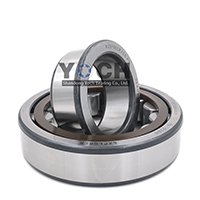
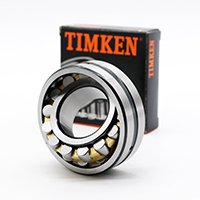
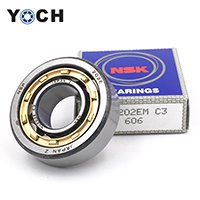
Roller bearings are anti-friction devices consisting of four main components: inner ring, outer ring, rolling elements (cylindrical rollers, tapered rollers, or needles), and a cage that maintains proper roller spacing. Unlike ball bearings that use spherical rolling elements, roller bearings employ cylindrical or tapered rollers that provide greater contact area and higher load capacity, making them ideal for heavy-duty applications in automotive, aerospace, and industrial machinery.
Primary Materials in Roller Bearing Manufacturing
The foundation of quality roller bearings begins with selecting appropriate materials. The most widely used material is AISI 52100 chromium steel, also known as 100Cr6 in European standards or SUJ2 in Japanese specifications. This high-carbon chromium alloy steel contains:
- Carbon: 0.93-1.05% (provides hardness and wear resistance)
- Chromium: 1.35-1.60% (enhances corrosion resistance and fatigue strength)
- Manganese: 0.25-0.45% (improves toughness)
- Silicon: 0.15-0.35% (strengthens the matrix)
After heat treatment, AISI 52100 achieves a hardness of 60-67 HRC, making it exceptionally suitable for bearing applications. Alternative materials include stainless steel (AISI 440C) for corrosion-resistant applications and ceramic materials for specialized high-speed or high-temperature environments.
Step-by-Step Roller Bearing Manufacturing Process
1. Raw Material Preparation and Forming
The manufacturing process begins with preparing the raw material through either hot or cold forming processes:
Forging Process: Steel billets are heated to approximately 1200°C and forged into rough ring shapes using precision forging equipment. This process aligns the grain structure and enhances material properties.
Stamping/Cutting Process: For smaller bearings, steel wire or tubing is cut to precise lengths using automated cutting machines, ensuring consistent dimensions for subsequent processing.
2. Heat Treatment Process
Heat treatment is crucial for achieving optimal material properties. The process involves:
Quenching: Components are heated to 830-870°C and rapidly cooled in oil or water, transforming the microstructure to martensite and achieving high hardness (58-62 HRC).
Tempering: Following quenching, components are reheated to 150-200°C to reduce brittleness and internal stresses while maintaining hardness. This creates the optimal balance between hardness and toughness essential for bearing longevity.
Some applications require case carburizing for low-carbon steels, creating a hard surface layer while maintaining a tough core that resists impact loading.
3. Precision Grinding Operations
Grinding represents the most critical phase in roller bearing manufacturing, where components achieve their final dimensions and surface finish:
Outer Ring Grinding: The outer diameter and raceway surfaces are ground to tolerances within ±1 micrometer using CNC grinding machines. The raceway geometry must be perfectly circular with controlled curvature radius.
Inner Ring Grinding: The bore diameter and inner raceway receive similar precision treatment. Advanced grinding methods include:
- Roller dressing grinding: For high-efficiency production
- Single-point diamond dressing: For superior surface quality
- Positive-negative grinding: For optimal surface roughness
- Offset grinding method: For minimal thermal distortion
Roller Grinding: Cylindrical or tapered rollers require extremely precise geometry, with diameter variations controlled within 0.5 micrometers. The large end face of tapered rollers demands special attention, as surface finish directly affects bearing performance.
4. Superfinishing Process
Following grinding, components undergo superfinishing using fine abrasive stones or tapes to achieve mirror-like surface finishes with Ra values between 0.1-0.4 micrometers. This process:
- Reduces friction and wear
- Improves lubricant retention
- Enhances fatigue life
- Minimizes noise and vibration
5. Component Cleaning and Inspection
Each component undergoes thorough ultrasonic cleaning to remove grinding residues and contaminants, followed by dimensional inspection using coordinate measuring machines (CMM) and laser measurement systems.
Assembly Process and Technologies
Modern roller bearing assembly employs highly automated production lines capable of producing bearings with cycle times as low as 10-25 seconds. The assembly process includes:
Component Feeding: Automated systems precisely position inner rings, outer rings, rollers, and cages.
Roller Installation: Precision mechanisms insert the correct number of rollers with controlled clearance.
Cage Assembly: Cages are installed to maintain roller spacing and prevent contact between adjacent rollers.
Lubrication: Appropriate grease or oil is applied based on application requirements, considering factors like operating temperature, speed, and load conditions.
Sealing: For sealed bearings, protective shields or contact seals are installed to prevent contamination and retain lubricant.
Quality Control and Testing Methods
Quality assurance in roller bearing manufacturing involves comprehensive testing protocols:
Dimensional Inspection
- Outer diameter measurement: ±1 μm accuracy
- Bore diameter verification: ±1 μm precision
- Raceway diameter control: ±1 μm tolerance
- Height measurement: ±3 μm accuracy
- Radial clearance: Controlled within specified ranges
Performance Testing
- Vibration analysis: Ensures smooth operation
- Noise level measurement: Critical for electric motor applications
- Torque testing: Verifies rotational resistance
- Radial and axial load testing: Confirms load capacity
Non-Destructive Testing
- Ultrasonic inspection: Detects internal defects
- Magnetic particle testing: Identifies surface cracks
- Hardness verification: Ensures proper heat treatment
- Microstructure examination: Confirms material properties
Surface Finish Requirements
Critical surfaces require specific roughness values:
- Raceway surfaces: Ra 0.1-0.4 μm
- Roller surfaces: Ra 0.05-0.2 μm
- Sealing surfaces: Ra 0.4-1.6 μm
Advanced Manufacturing Technologies
CNC Grinding Machines
Modern bearing manufacturing utilizes 5-axis CNC grinding machines with automatic tool changers and in-process measurement systems, achieving positioning accuracies within 0.1 micrometers.
Laser Measurement Systems
Real-time laser interferometers monitor component dimensions during grinding, enabling automatic compensation for thermal effects and wheel wear.
Artificial Intelligence Integration
AI-powered systems analyze grinding parameters, predict optimal conditions, and automatically adjust machine settings to maintain consistent quality while maximizing productivity.
Robotics and Automation
Collaborative robots handle delicate components, reducing contamination risks and ensuring consistent handling throughout the manufacturing process.
Industry Standards and Certifications
Roller bearing manufacturing adheres to stringent international standards:
ISO 492: Radial bearings – dimensional and geometrical tolerances ISO 199: Thrust bearings – specifications ABEC Standards: Annular Bearing Engineers Committee classifications (ABEC 1, 3, 5, 7, 9) DIN Standards: German Institute for Standardization (P0, P6, P5, P4, P2)
Higher ABEC/DIN ratings indicate tighter tolerances and greater precision, with ABEC 9/P2 representing the highest precision grade for super-critical applications.
Applications Across Industries
The precision manufacturing of roller bearings enables their use in diverse applications:
Automotive Industry: Wheel bearings, transmission systems, engine components Aerospace: Landing gear, flight control systems, jet engines Industrial Machinery: Electric motors, gearboxes, pumps, compressors Railway: Axle bearings, traction motors, suspension systems Wind Energy: Main shaft bearings, gearbox bearings, generator bearings
Future Trends in Roller Bearing Manufacturing
Industry 4.0 Integration
Smart factories with IoT-connected machines provide real-time monitoring, predictive maintenance, and adaptive manufacturing processes.
Sustainable Manufacturing
Energy-efficient grinding technologies, minimum quantity lubrication systems, and recycling programs reduce environmental impact while maintaining quality.
Advanced Materials
Development of new steel grades, ceramic hybrids, and polymer materials for specialized applications continues to expand bearing capabilities.
Additive Manufacturing
3D printing technologies for prototype development and specialized components complement traditional manufacturing methods.
Conclusion
The manufacturing of roller bearings represents one of the most demanding precision engineering processes in modern industry. From material selection through final assembly, each step requires meticulous attention to detail, advanced equipment, and rigorous quality control. The continuous evolution of manufacturing technologies, combined with increasingly sophisticated quality assurance methods, ensures that roller bearings meet the exacting requirements of contemporary mechanical systems.
Understanding these manufacturing processes helps engineers, procurement professionals, and maintenance personnel make informed decisions about bearing selection, application requirements, and performance expectations. As technology advances, roller bearing manufacturing continues to push the boundaries of precision, efficiency, and reliability, enabling the development of increasingly sophisticated mechanical systems across all industries.
The investment in advanced manufacturing technologies, comprehensive quality systems, and continuous process improvement ensures that modern roller bearings deliver the performance, longevity, and reliability that critical applications demand, making them indispensable components in the machinery that powers our world.