- Welcome to YOCH Bearing!
- 0086-531-85866205
- 0086-16653196205
- market@yochibearing.com

Bearing Heat Treatment and Surface Treatment: Complete Guide for Industrial Applications
SKF Bearing Storage Standards – Comprehensive Guidelines for Maintaining Long-Term Performance
15/12/2025Centrifugal Pump Bearing Selection: A Comprehensive Guide for Optimal Performance
22/12/2025What Are Bearing Heat Treatment Processes?
Bearing heat treatment is a critical manufacturing process that significantly enhances the mechanical properties and service life of bearings. The primary goal of bearing heat treatment is to achieve optimal hardness, wear resistance, and fatigue strength while maintaining adequate toughness for demanding industrial applications.
Quenching and Tempering for Bearing Components
The quenching and tempering process represents the foundation of bearing heat treatment. This two-stage process involves heating bearing components to temperatures between 810-900°C, followed by rapid cooling (quenching) and subsequent reheating to 170-250°C (tempering). Recent research indicates that the optimal quenching temperature for GCr15 bearing steel is 840°C, with tempering at 170°C providing superior wear resistance and microstructural stability.
Surface Hardening Techniques for Bearings
Surface hardening has become increasingly important in bearing manufacturing, allowing for hard surface layers while maintaining tough core properties. Modern bearing applications utilize several surface hardening methods:
Induction hardening provides rapid, controlled heating of bearing surfaces using electromagnetic fields, making it ideal for mass production of bearing components.
Laser hardening offers exceptional precision for complex bearing geometries, with minimal distortion and superior process control. Plasma hardening efficiently treats bearings with intricate shapes, particularly valuable for aerospace and precision applications.
Advanced Bearing Surface Treatment Technologies
Physical Vapor Deposition (PVD) Coating for Bearings
PVD coating technology has revolutionized bearing surface treatment by depositing thin, hard ceramic coatings such as TiN, TiAlN, and DLC (diamond-like carbon) onto bearing surfaces. These coatings significantly reduce friction coefficients, enhance wear resistance, and provide excellent corrosion protection. Modern PVD systems achieve coating thicknesses of 2-5 micrometers with exceptional adhesion strength exceeding 70 MPa.
Chemical Vapor Deposition (CVD) Bearing Coatings
CVD processes create extremely hard and wear-resistant coatings on bearing components, particularly effective for high-temperature applications. Recent developments in CVD technology enable the deposition of multilayer coatings that combine different ceramic materials, providing bearings with superior performance under extreme operating conditions.
Electroplating Solutions for Bearing Protection
Electroplating remains a cost-effective bearing surface treatment method, with recent innovations focusing on environmentally friendly alternatives. Modern pulse electroplating techniques incorporate hard particles like SiC and Al2O3 into metal matrices, creating composite coatings that enhance bearing wear resistance by up to 40% while maintaining compliance with environmental regulations.
Why Surface Treatment Matters for Bearing Performance
Corrosion Resistance Enhancement
Bearing surface treatment provides crucial protection against corrosion, particularly important for marine, offshore, and chemical processing applications. Advanced surface treatments can extend bearing life by 300% in corrosive environments, with multi-layer coating systems offering superior long-term protection compared to traditional single-layer approaches.
Friction and Wear Reduction
Proper surface treatment reduces bearing friction coefficients by 50-70%, directly translating to energy savings and extended service life. Textured surface treatments combined with advanced coatings can achieve friction coefficients as low as 0.06, significantly lower than conventional smooth surfaces.
Fatigue Life Improvement
Surface treatments enhance bearing fatigue resistance by creating compressive residual stresses at the surface, effectively preventing crack initiation and propagation. Laser cladding treatments have demonstrated the ability to extend bearing fatigue life by 200-300% compared to untreated components.
Choosing the Right Heat Treatment for Your Bearings
Application-Specific Considerations
Selecting appropriate bearing heat treatment requires careful evaluation of operating conditions, load requirements, and environmental factors. High-speed applications benefit from through-hardened bearings with precise dimensional control, while heavy-load applications require case-hardened components with deep hardened layers.
Material Selection Impact
Different bearing materials respond uniquely to heat treatment processes. High-carbon chromium bearing steels (AISI 52100) achieve optimal properties through conventional quenching and tempering, while stainless steel bearings require specialized heat treatment to maintain corrosion resistance while achieving adequate hardness.
Cost-Benefit Analysis
Modern heat treatment technologies offer varying cost structures, with conventional processes providing cost-effective solutions for standard applications, while advanced treatments like laser hardening and PVD coating justify higher initial costs through significantly extended service life and reduced maintenance requirements.
Environmental Considerations in Bearing Treatment
Sustainable Heat Treatment Practices
The bearing industry increasingly focuses on environmentally sustainable heat treatment processes, with innovations including energy-efficient furnaces, renewable energy integration, and optimized process parameters that reduce carbon emissions by up to 30% while maintaining treatment quality.
Eco-Friendly Surface Treatment Alternatives
Environmental regulations drive the development of chrome-free and lead-free surface treatment alternatives. Modern trivalent chromium plating and advanced polymer coatings provide equivalent corrosion protection while meeting stringent environmental standards, with some treatments achieving 95% reduction in hazardous waste generation.
Future Trends in Bearing Treatment Technology
Smart Heat Treatment Systems
Industry 4.0 integration enables real-time monitoring and control of bearing heat treatment processes, with AI-powered systems optimizing temperature profiles, atmosphere control, and cooling rates to achieve consistent quality while reducing energy consumption by 25-35%.
Nanotechnology Applications
Emerging nanotechnology applications in bearing surface treatment include nano-composite coatings that combine multiple functional properties, self-healing coatings with embedded microcapsules, and surface texturing at the nanoscale to achieve superlubricity conditions with friction coefficients below 0.01.
Hybrid Treatment Approaches
Future bearing treatments combine multiple technologies, such as laser texturing followed by PVD coating, creating hierarchical surface structures that optimize lubricant retention while providing exceptional wear resistance. These hybrid approaches can extend bearing life by 500% compared to conventional treatments.
Conclusion
Bearing heat treatment and surface treatment technologies continue evolving to meet increasingly demanding industrial requirements. From traditional quenching and tempering to advanced PVD coatings and laser surface engineering, these processes fundamentally determine bearing performance, reliability, and service life. As environmental considerations become paramount and Industry 4.0 transforms manufacturing, the bearing industry must balance performance optimization with sustainability requirements. Understanding these treatment options enables informed decision-making for specific applications, ensuring optimal bearing performance while minimizing environmental impact and lifecycle costs.
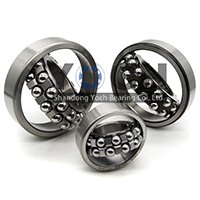
We are a bearing supplier from China. If you want to learn more about other bearing knowledge, you can watch our YouTube or contact us.
Keyword:Rolling bearing types,Rolling element bearing pdf,Rolling bearing hs code,Roller bearing vs ball bearing,What are roller bearings used for,Cylindrical roller bearing,SKF Bearings,NTN Bearing,KOYO Bearing.