- Welcome to YOCH Bearing!
- 0086-531-85866205
- 0086-16653196205
- market@yochibearing.com

Deep Groove Ball Bearing Clearance Classification: A Complete Guide

Clutch Bearing Working Principle and Structural Composition Detailed Explanation
24/12/2025SKF Cylindrical Roller Bearing Temperature Anomaly Troubleshooting and Resolution
30/12/2025Understanding Bearing Clearance Fundamentals
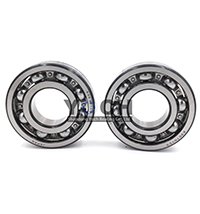
Bearing clearance represents the crucial gap between rolling elements and raceways in deep groove ball bearings. This microscopic space significantly impacts performance, lifespan, and operational efficiency. Proper clearance classification ensures optimal functionality across diverse industrial applications.
Standard Bearing Clearance Categories
Deep groove ball bearings typically feature five primary clearance classifications: C2, CN (normal), C3, C4, and C5. Each category serves specific operational requirements, with C2 representing minimal clearance and C5 providing maximum internal space. These standardized classifications enable engineers to select appropriate bearings for varying temperature and load conditions.
Factors Influencing Bearing Clearance Selection
Temperature variations represent the primary consideration when determining suitable bearing clearance. As operating temperatures increase, bearing components expand, potentially reducing internal clearance. Additionally, interference fits during installation can diminish available clearance space, necessitating careful calculation during selection processes.
Measuring Bearing Clearance Accurately
Precise clearance measurement requires specialized equipment and techniques. Axial displacement methods involve applying controlled forces and measuring resulting movement. Radial clearance assessment utilizes feeler gauges or specialized instrumentation to determine exact gap dimensions, ensuring compliance with manufacturer specifications.
Installation Impact on Bearing Clearance
Mounting procedures significantly affect final clearance conditions. Interference fits on shafts or housings can reduce internal clearance by up to 80% of the interference amount. Proper installation techniques, including controlled heating methods and specialized tools, help maintain designated clearance classifications.
Operational Benefits of Proper Clearance Classification
Correctly classified bearing clearance prevents premature failure and extends service life. Adequate internal space accommodates thermal expansion, lubricant distribution, and manufacturing tolerances. Conversely, excessive clearance can generate unwanted vibration and noise, while insufficient clearance leads to increased friction and heat generation.
Common Bearing Clearance Applications
C3 clearance bearings commonly serve high-speed applications with elevated operating temperatures. C4 classifications suit heavy-duty industrial equipment experiencing significant thermal variations. Normal clearance (CN) bearings fulfill general-purpose applications under standard operating conditions.
Maintenance Considerations for Bearing Clearance
Regular monitoring helps maintain optimal clearance conditions throughout bearing lifespan. Vibration analysis and temperature monitoring identify clearance-related issues before catastrophic failure occurs. Periodic inspection protocols should include clearance verification, particularly after extended operation periods.
Advanced Bearing Clearance Technologies
Modern manufacturing techniques enable tighter tolerance control and customized clearance specifications. Computer-aided design systems calculate optimal clearance values based on specific application parameters. Premium bearing manufacturers offer specialized clearance classifications for extreme operating environments.
Troubleshooting Bearing Clearance Issues
Excessive noise, elevated temperatures, or premature wear often indicate clearance-related problems. Diagnostic procedures should examine installation methods, operating conditions, and lubrication practices. Corrective measures may involve bearing replacement with alternative clearance classifications or operational parameter adjustments.
Future Trends in Bearing Clearance Optimization
Emerging technologies focus on smart bearings with integrated sensors monitoring real-time clearance conditions. Advanced materials and manufacturing processes promise enhanced clearance control and extended service intervals. Industry 4.0 integration enables predictive maintenance based on clearance condition monitoring.
This comprehensive understanding of deep groove ball bearing clearance classification enables informed decision-making for optimal bearing selection and application across diverse industrial sectors.
We are a bearing supplier from China. If you want to learn more about other bearing knowledge, you can watch our YouTube or contact us.