- Welcome to YOCH Bearing!
- 0086-531-85866205
- 0086-16653196205
- market@yochibearing.com

FAG Bearing Grease Selection and Replacement Cycle: A Comprehensive Guide
NSK Linear Guides: Structure and Characteristics
25/03/2026Four Key Points to Improve Deep Groove Ball Bearing Operating Accuracy
31/03/2026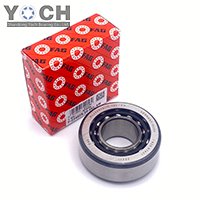
Proper lubrication is the cornerstone of bearing longevity and operational efficiency. For FAG bearings, selecting the appropriate grease and establishing optimal replacement intervals are critical factors that directly impact equipment reliability and maintenance costs. This comprehensive guide explores the essential principles of FAG bearing grease selection and provides practical recommendations for determining replacement cycles.
Bearing Grease Selection Criteria
Selecting the right grease for FAG bearings requires careful consideration of multiple operational parameters. The primary factors include operating temperature, load conditions, rotational speed, and environmental exposure. FAG’s Arcanol grease series offers specialized formulations designed to meet diverse application requirements, from standard industrial operations to extreme conditions such as high temperatures, heavy loads, or food-grade applications.
When selecting grease, pay close attention to the base oil viscosity, which should match your bearing’s speed and load characteristics. For high-speed applications, greases with lower viscosity base oils are preferred, while heavy-load conditions benefit from higher viscosity formulations. The consistency grade, measured by NLGI numbers, also plays a crucial role—softer greases (NLGI 1-2) are suitable for low-speed, high-load applications, whereas firmer greases work better in high-speed scenarios.
Bearing Lubrication Interval Fundamentals
Grease has a finite service life within a bearing due to gradual leakage and property degradation over time. Therefore, establishing appropriate relubrication intervals is essential for maintaining optimal bearing performance. According to FAG technical guidelines, the relubrication interval depends on bearing type, size, speed parameter (n·dM), operating temperature, and load conditions.
For bearings operating under normal conditions with speed parameters up to 2.6×10⁶ min⁻¹·mm, lifetime lubrication is often achievable. However, demanding applications involving high speeds, elevated temperatures, or heavy loads require planned relubrication at calculated intervals. When designing bearing arrangements for relubrication, ensure proper provision of inlet and outlet ducts for grease flow and collection chambers for used grease.
Bearing Temperature Effects on Grease Life
Temperature significantly influences grease performance and replacement frequency. As a general rule, when bearing operating temperature exceeds 70°C, the relubrication interval should be reduced by half for every 15°C increase. This adjustment accounts for accelerated oxidation and base oil evaporation at elevated temperatures.
For high-temperature applications exceeding 120°C, specialized greases with synthetic base oils such as esters or polyalphaolefins (PAO) are recommended. These formulations exhibit favorable viscosity-temperature behavior, maintaining adequate lubrication film thickness across wide temperature ranges. FAG Arcanol greases like SM 28 (temperature range -40°C to +260°C) are specifically engineered for such demanding thermal environments.
Bearing Load and Environmental Considerations
Load conditions directly impact grease replacement cycles. Under heavy load conditions where the load ratio C/P is less than 10, more frequent relubrication is necessary. The dynamic equivalent load (P) relative to the basic dynamic load rating (C) determines appropriate correction factors—higher loads require shorter intervals.
Environmental contamination presents another critical factor. Applications exposed to dust, moisture, or chemical agents demand enhanced sealing and more frequent grease replacement. In such cases, continuous relubrication helps maintain protective grease collars at seal interfaces, improving contamination exclusion. For vertical shaft arrangements, doubling the standard relubrication frequency is recommended to compensate for gravity-induced grease migration.
Bearing Grease Replacement Best Practices
Effective grease replacement requires proper technique to maximize bearing protection. Before relubrication, clean the grease fitting thoroughly and remove the drain plug to allow used grease expulsion. The recommended grease quantity can be estimated using the formula: G = 0.0048 × OD × W (metric units), where G represents grease quantity in grams, OD is bearing outer diameter in millimeters, and W is bearing width in millimeters.
For applications with extended lubrication intervals, aim for complete grease replacement rather than simple replenishment. This “flushing effect” requires applying up to three times the normal relubrication quantity to purge degraded grease effectively. Ensure used grease can escape freely or provide adequate collection cavities to prevent over-lubrication complications.
Bearing Maintenance Planning and Monitoring
Implementing a structured lubrication management program ensures consistent bearing care. FAG’s Motion Guard SELECT MANAGER software facilitates lubricator selection, dispensing time configuration, and maintenance schedule development. Regular monitoring of bearing temperature, vibration, and noise levels provides early warning of lubrication deficiencies.
For seasonal equipment idle periods exceeding six months, apply fresh grease before storage to prevent corrosion and ensure readiness for restart. When returning equipment to service, verify grease condition and replenish if necessary. Document all lubrication activities, including grease type, quantity applied, and bearing condition observations, to refine maintenance intervals based on actual operational experience.
Conclusion
Optimal FAG bearing performance depends on informed grease selection and disciplined replacement cycle management. By matching grease characteristics to operational demands and adjusting replacement intervals based on temperature, load, and environmental factors, maintenance professionals can significantly extend bearing service life while minimizing unplanned downtime. Remember that bearings are only as reliable as their lubrication—investing in proper grease selection and timely replacement yields substantial returns in equipment reliability and operational efficiency.