- Welcome to YOCH Bearing!
- 0086-531-85866205
- 0086-16653196205
- market@yochibearing.com

FAG Cylindrical Roller Bearing Clearance Adjustment: A Comprehensive Guide
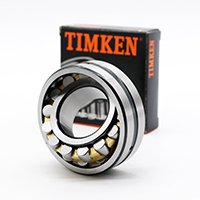
Installation of TIMKEN Cylindrical Roller Bearings
23/04/2026Hot Expansion Method for Installing TIMKEN Cylindrical Roller Bearings
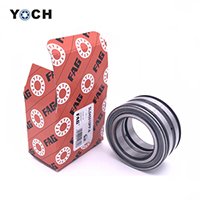
29/04/2026Proper clearance adjustment is one of the most critical steps during the installation and maintenance of FAG cylindrical roller bearings. Internal clearance directly influences load distribution, operating temperature, rotational accuracy, and overall service life. This article provides a detailed overview of FAG cylindrical roller bearing clearance adjustment, covering measurement techniques, adjustment methods, and best practices to ensure optimal machinery performance.
Understanding FAG Cylindrical Roller Bearing Internal Clearance
Internal clearance in a cylindrical roller bearing refers to the total distance through which one bearing ring can be moved relative to the other in the radial or axial direction before the bearing is mounted. FAG cylindrical roller bearings are manufactured with specific internal clearance classifications, including C1, C2, C3, C4, and C5, with C3 being the most commonly specified for general industrial applications.
The correct clearance ensures that rollers maintain proper contact with the raceways under operating conditions. Too little clearance can cause excessive preload, leading to overheating and premature fatigue. Conversely, excessive clearance reduces load zone size, concentrates stress on individual rollers, and generates unwanted vibration and noise.
Why Proper Bearing Clearance Matters for Performance
The performance of any rotating system depends heavily on maintaining the correct bearing clearance. When FAG cylindrical roller bearings operate, they generate heat, causing thermal expansion of the inner ring, outer ring, and rolling elements. If the initial clearance is insufficient, thermal expansion can eliminate the remaining gap entirely, creating destructive preload conditions.
Additionally, proper bearing clearance ensures uniform load sharing across all rollers in the load zone. With optimal clearance, the bearing can accommodate shaft deflection and minor misalignment without compromising operational stability. Industries such as machine tools, gearboxes, and electric motors rely on precise bearing clearance to achieve the required running accuracy and longevity.
Methods for Adjusting FAG Bearing Radial Clearance
Several proven methods exist for adjusting the radial clearance of FAG cylindrical roller bearings, depending on the application design and accessibility.
1. Selective Assembly Using Inner Ring Taper FAG cylindrical roller bearings with tapered bores (designated by suffix K) are commonly mounted on tapered shafts or adapter sleeves. By driving the inner ring up the taper, the ring expands radially, reducing internal clearance. The degree of interference and resulting clearance can be controlled by measuring the axial displacement of the inner ring relative to the outer ring.
2. Shim Adjustment In split-housing or plummer block arrangements, shims placed between the housing cap and base allow technicians to control the axial position of the outer ring. By adding or removing shims, operators can fine-tune the bearing clearance to meet precise specifications.
3. Threaded Ring and Nut Systems Some FAG bearing assemblies incorporate threaded retaining rings or precision locknuts. These components enable gradual axial displacement of bearing rings, allowing real-time clearance adjustment during assembly. This method is particularly effective in high-precision spindle applications.
Bearing Clearance Measurement Techniques
Accurate measurement is essential before and after adjustment. The following techniques are widely used for FAG cylindrical roller bearings:
Feeler Gauge Method For larger bearings with substantial radial clearance, feeler gauges inserted between the roller and outer ring raceway provide a quick clearance reading. Multiple measurements should be taken at different circumferential positions to ensure consistency.
Dial Indicator Method This is the most reliable technique for measuring bearing clearance. The outer ring is held stationary while the inner ring is moved radially from one extreme position to the other. A dial indicator captures the total displacement, which represents the radial internal clearance. For tapered bore bearings, measuring the axial drive-up distance with a dial indicator is often more practical than direct radial measurement.
Torque Method In certain FAG bearing arrangements, the adjustment is verified by measuring the starting torque or rotating torque after assembly. An increase in torque beyond specified limits indicates excessive preload, while unusually low torque suggests excessive clearance.
Common Mistakes in Bearing Clearance Adjustment
Even experienced technicians can make errors during clearance adjustment that compromise bearing performance.
Ignoring Temperature Effects Failing to account for operating temperature differentials between the shaft and housing is a frequent cause of incorrect clearance. The bearing clearance at operating temperature (effective clearance) often differs significantly from the clearance measured at room temperature.
Uneven Mounting Pressure Applying mounting force through the rolling elements rather than the ring being press-fitted can damage raceways and alter internal geometry. Always use proper mounting tools and apply force evenly to the correct bearing ring.
Neglecting Post-Assembly Verification Assuming the clearance is correct without measurement after installation is risky. Always verify clearance using appropriate gauges or indicators once the bearing is fully seated and locked in position.
Maintenance Tips for Optimal Bearing Operation
To maintain correct clearance throughout the service life of FAG cylindrical roller bearings, implement the following maintenance practices:
- Regular Monitoring: Use vibration analysis and thermography to detect early signs of clearance-related issues such as looseness or preload.
- Lubrication Management: Use the correct lubricant type and quantity. Over-greasing can increase operating temperature and affect effective clearance.
- Shaft and Housing Inspection: Check for wear, out-of-roundness, and corrosion during every maintenance cycle. Damaged seats can alter bearing fit and clearance.
- Documentation: Record initial clearance values, adjustment measurements, and operating temperatures to establish baseline data for future troubleshooting.
Conclusion
FAG cylindrical roller bearing clearance adjustment is a precision task that demands careful measurement, correct mounting techniques, and thorough understanding of operating conditions. By following the methods and best practices outlined in this guide, maintenance professionals can maximize bearing life, minimize downtime, and ensure reliable equipment performance. Proper attention to bearing clearance today prevents costly failures tomorrow.
We are a bearing supplier from China. If you want to learn more about other bearing knowledge, you can watch our YouTube or contact us.