- Welcome to YOCH Bearing!
- 0086-531-85866205
- 0086-16653196205
- market@yochibearing.com

TIMKEN Tapered Roller Bearing Clearance Adjustment
Hot Expansion Method for Installing TIMKEN Cylindrical Roller Bearings
29/04/2026Manual Pressing Method for Installing TIMKEN Cylindrical Roller Bearings
09/05/2026Tapered roller bearings are critical components in rotating machinery, and proper clearance adjustment directly impacts equipment performance, service life, and operational reliability. TIMKEN, as a globally recognized bearing manufacturer, provides comprehensive guidelines for tapered roller bearing clearance adjustment that help engineers and maintenance personnel achieve optimal bearing performance across various industrial applications.
Why TIMKEN Tapered Roller Bearing Clearance Matters
Bearing clearance, also known as internal clearance, refers to the total distance that one bearing ring can be moved relative to the other in the radial or axial direction. For TIMKEN tapered roller bearings, maintaining the correct clearance is essential because excessive clearance leads to increased vibration, noise, and premature wear, while insufficient clearance can cause overheating, seizure, and catastrophic failure. The unique geometry of tapered roller bearings allows for precise clearance adjustment during installation, making them ideal for applications requiring high load capacity and accurate positioning.
Understanding TIMKEN Tapered Roller Bearing Design
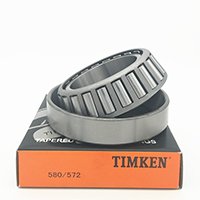
TIMKEN tapered roller bearings feature inner and outer ring raceways that are tapered, with tapered rollers arranged between them. This design enables the bearing to handle combined radial and axial loads simultaneously. The contact angle of the rollers determines the bearing’s ability to support thrust loads. During assembly, the axial position of the inner ring relative to the outer ring can be adjusted to achieve the desired preload or clearance. TIMKEN offers single-row, double-row, and four-row tapered roller bearings, each requiring specific clearance adjustment procedures based on application requirements.
Methods for TIMKEN Tapered Roller Bearing Clearance Adjustment
Several proven methods exist for adjusting tapered roller bearing clearance. The most common approach involves controlling the axial position of the inner ring cone relative to the outer ring cup. For single-row bearings mounted in pairs, adjusting the spacer width between the two bearings achieves the target clearance or preload. Another method uses shims or threaded collars to precisely position the bearing components. TIMKEN recommends using feeler gauges or dial indicators to measure clearance during adjustment, ensuring accuracy within specified tolerances. For critical applications, temperature monitoring during run-in periods helps verify that the adjusted clearance remains within acceptable limits.
Step-by-Step TIMKEN Tapered Roller Bearing Adjustment Procedure
Begin by thoroughly cleaning all bearing components and mating surfaces to prevent contamination. Install the outer ring cup into the housing with proper fits, ensuring full seating against the shoulder. Mount the inner ring cone onto the shaft, followed by the roller and cage assembly. Apply the appropriate lubricant before final assembly. Adjust the axial position using spacers, shims, or nuts until the specified clearance is achieved. For paired bearings, measure the total axial movement and compare it against TIMKEN specifications. Rotate the shaft during adjustment to ensure rollers seat properly. Finally, secure the adjustment mechanism and verify clearance after the bearing reaches operating temperature.
Common Mistakes in TIMKEN Tapered Roller Bearing Clearance Setting
Technicians frequently make errors during clearance adjustment that compromise bearing performance. Over-tightening the adjustment nut creates excessive preload, generating dangerous heat levels and accelerating fatigue failure. Conversely, leaving too much clearance causes roller skidding and brinelling damage. Another common mistake involves failing to account for thermal expansion during operation, which reduces clearance at working temperatures. Using incorrect measurement techniques or worn tools also leads to inaccurate clearance settings. Always consult TIMKEN technical documentation for specific bearing series and application requirements.
Tools Required for TIMKEN Tapered Roller Bearing Clearance Measurement
Accurate clearance adjustment requires specialized tools including dial indicators with magnetic bases for measuring axial movement, feeler gauges for checking radial clearance, and torque wrenches for proper nut tightening. Torque multipliers may be necessary for large bearings. Micrometers and calipers verify spacer and shim dimensions. TIMKEN provides bearing adjustment tools designed specifically for their product lines, ensuring consistent and reliable results. Thermal imaging cameras help monitor temperature rise during initial operation, confirming that clearance settings remain appropriate under load.
TIMKEN Tapered Roller Bearing Clearance Specifications
TIMKEN publishes detailed clearance tables for each bearing series, specifying minimum and maximum values for different operating conditions. Standard clearance classes range from C2 (tighter than normal) through C0, C3, C4, and C5 (looser than normal). Selection depends on shaft and housing fits, operating temperature differentials, and load characteristics. High-speed applications typically require greater clearance to accommodate thermal expansion, while precision machinery demands tighter clearances for accurate positioning. Always reference the latest TIMKEN catalog for current specifications.
Maintenance and Re-adjustment of TIMKEN Tapered Roller Bearings
Periodic inspection and potential re-adjustment maintain optimal bearing performance throughout service life. Monitor vibration levels, operating temperatures, and noise characteristics as indicators of clearance changes. After extended operation, wear may increase clearance beyond acceptable limits, requiring shim replacement or spacer modification. Document all adjustment values and maintenance activities for trend analysis. When re-adjusting existing bearings, inspect raceways and rollers for damage before resetting clearance. Proper maintenance extends bearing life and prevents unexpected equipment downtime.
Conclusion
TIMKEN tapered roller bearing clearance adjustment is a precision operation requiring technical knowledge, proper tools, and careful attention to manufacturer specifications. Correct clearance ensures reliable operation, maximizes bearing service life, and protects valuable rotating equipment. By following established procedures and avoiding common errors, maintenance professionals can achieve consistent results that meet TIMKEN performance standards. Regular monitoring and timely re-adjustment maintain these benefits throughout the bearing’s operational lifespan.
We are a bearing supplier from China. If you want to learn more about other bearing knowledge, you can watch our YouTube or contact us.