- Welcome to YOCH Bearing!
- 0086-531-85866205
- 0086-16653196205
- market@yochibearing.com

How Spherical Plain Bearings Solve Multi-Angle Oscillation Demands

The Critical Role of Linear Bearings in Achieving Precise Linear Motion
21/08/2026
How Stainless Steel Bearings Resist Humid and Corrosive Environments
01/09/2026Modern machinery often requires components that can pivot, swivel, and oscillate under heavy loads. Standard rolling-element bearings work well for pure rotation. However, they fail when shafts must tilt or swing at varying angles. Spherical plain bearings solve this problem with elegant simplicity. Their unique geometry allows smooth multi-directional movement even in harsh industrial environments.
Understanding Spherical Plain Bearing Structure
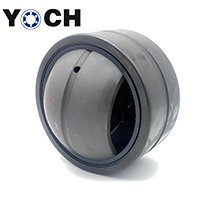
A spherical plain bearing consists of an inner ring and an outer ring. The outer surface of the inner ring is spherical. The inner surface of the outer ring matches this curvature precisely. This ball-and-socket arrangement creates a sliding contact interface. Unlike ball or roller bearings, there are no rolling elements between the rings. The inner ring can tilt and rotate freely within the outer ring. This design permits angular misalignment up to several degrees. Some specialized variants allow tilt angles as large as twenty-five degrees. The contact surfaces are typically hardened steel or bronze. Many modern versions feature PTFE-based self-lubricating liners. These liners reduce friction and eliminate the need for frequent grease application.
Why Spherical Plain Bearings Handle Angular Movement
The key advantage lies in the spherical sliding interface. Load transmits across a broad curved contact area. This geometry naturally accommodates oscillation in multiple planes simultaneously. The bearing does not constrain the shaft to a single axis of rotation. Instead, it permits conical movement and swiveling action. Engineers often describe this capability as “accommodating misalignment.” In reality, the design intentionally enables controlled angular freedom. Heavy radial loads, axial loads, and combined loads are all supported effectively. The absence of rolling elements means there is no risk of brinelling during static oscillation. This makes spherical plain bearings ideal for applications with slow, repetitive swinging motions.
Key Applications of Oscillating Bearing Systems
Construction equipment relies heavily on these bearings. Hydraulic cylinder rod ends use them to connect pistons to machine frames. The cylinder may push or pull at constantly changing angles during operation. Articulated joints in excavators, loaders, and cranes depend on this technology. Automotive suspension systems incorporate spherical plain bearings in control arms and tie rods. They allow wheels to move up and down while steering angles change simultaneously. Aerospace applications include flight control linkages and landing gear assemblies. Here, reliability under extreme conditions is absolutely critical. Agricultural machinery, packaging equipment, and robotic arms also benefit from compact spherical joints. In each case, the bearing must survive millions of oscillation cycles without excessive wear.
Bearing Selection for Complex Swing Conditions
Choosing the correct spherical plain bearing requires careful analysis. Load magnitude and direction are the primary considerations. Dynamic load ratings indicate capacity under oscillating conditions. Static load ratings matter for applications with infrequent movement or heavy shock loads. The operating environment dictates material selection. Steel-on-steel bearings withstand high temperatures and heavy impacts. They require regular lubrication to prevent galling and seizing. Self-lubricating bearings with composite liners suit maintenance-free applications. However, their temperature limits and load capacities differ from steel versions. The required tilt angle must match the bearing’s geometric capability. Shaft fit and housing fit tolerances affect performance and lifespan. Consult manufacturer catalogs for specific misalignment and load data.
Installation and Maintenance of Spherical Plain Bearings
Proper installation ensures maximum service life. The housing bore and shaft must meet recommended tolerances. Press fitting should apply force only to the ring being mounted. Never press the inner ring when installing the outer ring into a housing. Misalignment during installation can damage the sliding surfaces. Lubricated bearings need appropriate grease at specified intervals. Use high-quality lubricants compatible with the bearing material. Inspect bearings periodically for wear, corrosion, and contamination. Excessive clearance or rough operation indicates replacement is necessary. Self-lubricating bearings require less maintenance but still need visual inspection. Keep the surrounding area clean to prevent debris from entering the joint.
Conclusion
Spherical plain bearings fill a critical niche in mechanical design. They transform rigid connections into flexible, load-carrying joints. Their ability to oscillate at multiple angles makes them irreplaceable in many industries. Engineers should carefully evaluate load, angle, and environmental factors during selection. With proper installation and maintenance, these bearings deliver years of reliable service. When your design demands freedom of movement under heavy loads, spherical plain bearings provide the ideal solution.
We are a bearing supplier from China. If you want to learn more about other bearing knowledge, you can watch our YouTube or contact us.