- Welcome to YOCH Bearing!
- 0086-531-85866205
- 0086-16653196205
- market@yochibearing.com

Repair And Maintenance Of Automobile Wheels
The Main Reason For Cracks On Bearings
04/11/2024Bearing Installation Knowledge
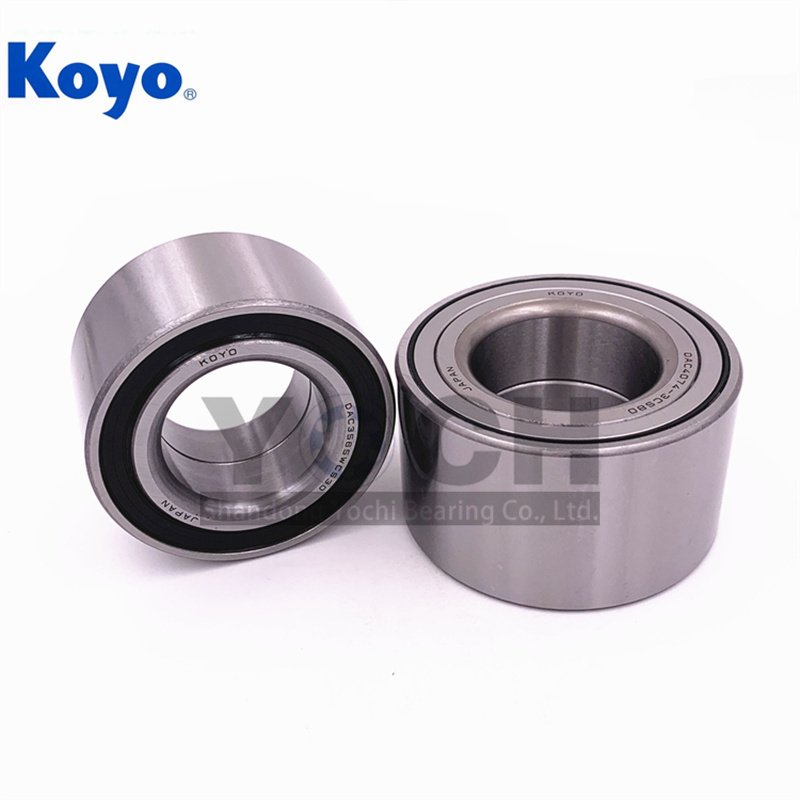
22/11/2024Wheel hub bearings are important running parts of automobiles. The wheel hub shaft is responsible for reducing the friction resistance of the chassis during operation and maintaining the normal driving of the car. If the wheel hub bearing fails, it may cause noise, bearing heating, etc., especially for the front wheel, which may easily lead to dangerous phenomena such as loss of control. Therefore, wheel hub bearings must be maintained regularly.
- Inspection of automobile wheel hub bearings
(1) When checking the tightness of the wheel hub bearing, first raise the axle of the wheel at one end of the wheel hub to be inspected, and use tools such as a bench and a cover to safely set up the car.
(2) Turn the wheel to be inspected several times by hand to see if it rotates smoothly and whether there is any abnormal noise. If it rotates unsteadily and there is a friction sound, it means that the brake part is abnormal; if there is no noise, the rotation is unsteady and it is sometimes tight and sometimes loose, it means that the bearing part is abnormal. When the above abnormal phenomena occur, the wheel hub should be disassembled and inspected. For small cars, when checking the wheel hub bearing, hold the upper and lower sides of the tire with both hands, and turn the tire back and forth with both hands, repeating this several times. If it is normal, there should be no looseness or blockage; if there is a noticeable looseness during shaking, the wheel hub should be disassembled for inspection.
(3) Inspection of brakes. Usually, when checking the wheel hub bearings, the wheel brake device is also checked. If there are oil stains on the inside of the tire, it is likely caused by oil leakage from the brake cylinder or brake oil pipe. The cause should be found out and eliminated in time.
- Maintenance of automobile wheel hub bearings Before removing the wheel hub, you should prepare for wheel hub maintenance, stop the car and raise the axle to ensure the safety of maintenance operations.
(1) Remove the decorative cover and dust cover of the wheel hub axle head;
(2) Remove the tire nut and tire, and be careful not to damage the thread of the tire bolt. If it is a disc brake, the brake should be removed and the lock ring or lock pin should be removed with pliers.
(3) Remove the wheel hub with special tools;
(4) Scrape off the old grease in the bearing, journal and wheel hub cavity, clean the wheel hub bearing and journal with a cleaning agent and wipe them dry with a cloth, and finally wipe the inner cavity of the wheel hub with a cloth.
(5) Check the wheel hub bearing and bearing race. If cracks, fatigue peeling and loose bearing rollers are found, the bearing should be replaced. If pitting is found on the bearing race, the bearing should also be replaced.
(6) Check the fit between the inner diameter of the bearing and the journal. The clearance should not be greater than 0.10 mm. When measuring the journal, measure at the upper and lower parts vertical to the ground (where the greatest wear occurs). If the clearance exceeds the specified use limit, replace the bearing to restore the normal clearance. It is not allowed to burr or pit on the journal to reduce the clearance.
(7) After all parts meet the requirements, apply grease to the inner bearing and place it in the wheel hub.
(8) When applying grease to the inner cavity of the bearing, pay attention to squeeze the grease into the bearing until the grease comes out from the other side of the bearing. Apply a thin layer of grease to the wheel hub cavity and the shaft head cover to prevent rust. Be careful not to apply too much grease in the wheel hub cavity, otherwise it will affect heat dissipation and braking.
(9) Install the wheel hub and outer bearing back on the journal, tighten the shaft head adjustment nut by hand, and then tighten the adjustment nut with the shaft head wrench to the specified torque. After tightening the nut, turn the wheel hub a few times to check the bearing installation; on the other hand, turn the bearing to make it fit correctly with the raceway. At this time, the bearing is properly tight and the wheel rotates freely without any axial clearance.
(10) Finally, install the lock plate, fixing nut, tire, dust cover and decorative cover in sequence.
(11) After the wheel hub bearing is adjusted, drive a certain distance (about 10km), stop and check, and feel the temperature of the wheel hub. If it is hot, it is caused by over-tightening of the bearing. It should be readjusted and the bearing tightness should be appropriately loosened.