- Welcome to YOCH Bearing!
- 0086-531-85866205
- 0086-16653196205
- market@yochibearing.com

What Are Deep Groove Ball Bearings
what are skateboard bearings
23/11/2021What Are Tapered Roller Bearings?
25/11/2021Deep groove ball bearings are similar to traditional bearings but have raceways that closely fit the dimensions of the balls that run in them. These deep grooves result in balls that are more stable and can handle higher loads than shallow-groove bearings. They still provide low friction, and the deep groove also limits vibration and noise while also providing the ability for some axial load capacity.
A Short Introduction to Ball Bearings
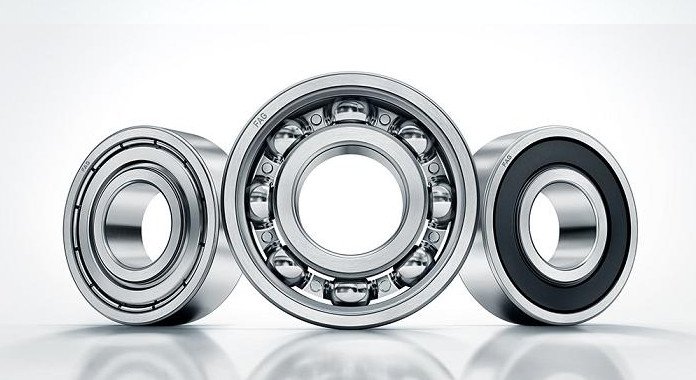
Rolling bearings are an essential component of rotating or oscillating machine elements. They help support and guide rotational movement and transfer loads between different components, such as axles, shafts, and wheels.
Ball bearings are a type of rolling bearing that have a ball rolling element. This ball sits in a ring raceway, or groove, resulting in a relatively low contact area. The reduced contact area decreases friction but limits the weight the bearing can carry. Ball bearings are traditionally used in high-speed, low-load applications, where their reduced friction, noise, and vibration help prevent excess wear and tear.
Ball bearings typically accommodate radial loads or loads that are perpendicular to the shaft. While some ball bearing types can handle axial loads (parallel to the shaft), they’re typically limited to extremely low carrying capacities.
What are Deep Groove Ball Bearings?
Deep groove ball bearings are similar to traditional bearings but have raceways that closely fit the dimensions of the balls that run in them. These deep grooves result in balls that are more stable and can handle higher loads than shallow-groove bearings. They still provide low friction, and the deep groove also limits vibration and noise while also providing the ability for some axial load capacity.
If you’ve ever seen any type of ball bearing, chances are you were looking at a deep groove ball bearing. These bearings are some of the most common due to their versatility, availability, and low friction. They’re ideal for high rotational speeds and offer several advantages over other ball bearing types.
These bearings come in a massive array of designs, sizes, and load-bearing capacities, making them ideal for home or industrial use. Also, it’s straightforward to replace traditional bearings with deep groove ball bearings, which can improve the longevity and efficiency of the machine.
Types of Deep Groove Ball Bearings
Single-Row Deep Groove Ball Bearings
This is the typical deep groove ball bearing that has a single raceway. These are usually robust and made from durable materials, ensuring that these bearings have an extended service life.
Single-row deep groove ball bearings are also subdivided into other types, ranging from 3 mm to 400 mm bore sizes, suitable for almost any application. Some manufacturers will also offer thin, narrow, wide, or miniature bearings depending on clients’ needs.
Since deep groove ball bearings need to withstand extreme conditions, manufacturers also offer ceramic-coated bearings to handle electric pitting and high-temperature units that can withstand up to 660 degrees F.
One of the latest developments in single-row deep groove ball bearings is the sensor-bearing unit, which can measure the status of the ball bearing components. These units are simple and easy to use and can help with speed sensing, angular position measuring, and steering, making them useful in electric motors, tractors, conveyors, and road rollers.
Sealed Deep Groove Ball Bearings
Sealed deep groove ball bearing are similar to single-row bearings, except that they have steel or rubber shields installed on one or both sides of the bearing. These seals are pre-lubricated with grease to extend the lifespan of the bearing.
Many manufacturers used sealed ball bearings in contaminated environments that may otherwise influence the performance of the bearing. The shields help the bearing retain grease while also preventing any contaminants from entering the bearing itself.
Larger deep groove ball bearings may even use machined brass cages for high-speed applications, where the cage prevents unwanted wear and tear.
Flanged Deep Groove Ball Bearings
Some deep groove ball bearings come with a flanged outer ring, which works similarly to a snap ring on standard ball bearings. The flange improves the bearing’s running efficiency and is also easier to machine due to the simplicity of the housing bore.
Flanged deep groove ball bearings are excellent for bearing axial loads, such as in tube ends or on belt guide rollers. Some variants even have swivel housing to allow for slight misalignments and better axial loads.
Double-Row Deep Groove Ball Bearings
The double-row design allows for a significantly higher load carrying capacity while still retaining the bearing’s low friction characteristics. Double-row bearings are usually just slightly wider than their single-row counterparts, making them almost as versatile and practical.
The main drawback of double-row deep groove ball bearings is that they do not come with seals or shields, though some may be fitted with cages. These cages assist with installation and assembly but are susceptible to mechanical stresses during operation. It’s vital to choose the right type of cage for the specific application, especially as some cage materials are sensitive to specific lubricants.
Maximum Type Ball Bearings
These ball bearings have many more rolling elements than their single and double-row counterparts. These additional balls allow for higher performance and higher precision without sacrificing efficiency or longevity. Like single-row deep groove ball bearings, they can be either open or shielded, depending on the application and requirements.
The Benefits of Deep Groove Ball Bearings
Deep groove ball bearings have several advantages over traditional ball bearings. These include:
Ability to Carry Radial and Axial Loads
One of the most considerable drawbacks of traditional ball bearings is their inability to bear axial loads. Most deep groove ball bearings can handle around 50% of their radial load in the axial plane, though some smaller bearings can only handle around 25% of the radial load. This ability to bear axial and radial loads makes deep groove ball bearings extraordinarily versatile and has made them popular in a wide variety of industries.
Low Friction
Deep groove ball bearings create less friction than standard bearings, which translates to cost savings in several ways. Firstly, it lowers the operating temperature of the bearing, which extends the lifespan of the bearing. It also makes it cheaper to operate the machinery with the bearing due to increased efficiency and lowered maintenance requirements. Low friction also results in lowered noise and vibration, making these bearings ideal for high rotational environments, where they will use less lubrication than their traditional counterparts.
Easy to Install
Deep groove ball bearings are easy to install, which leads to simplified assembly and higher load capacity. Many manufacturers take advantage of the benefits of deep groove ball bearings and reduce the housing dimensions of machinery, which leads to smaller and lighter assemblies. Deep groove ball bearings also fit in a traditional bearing housing, which makes it simple to replace traditional ball bearings with their superior counterparts.
Common Uses of Deep Groove Ball Bearings

Every spinning part uses a ball bearing, and thanks to the benefits of deep groove ball bearings that we’ve discussed, they are the most common type of ball bearing.
Industrial
Deep groove ball bearings are essential components of heavy machinery. They’re particularly useful in:
- Gearboxes
- Motors
- Pumps
- Construction equipment
- Engineering machinery
- Wind turbines
- Agricultural machinery
- Mining
- Machine tools
- Office equipment
- Medical devices
- Food processing machinery
- Aerospace