- Welcome to YOCH Bearing!
- 0086-531-85866205
- 0086-16653196205
- market@yochibearing.com

Structural Characteristics of Sealed Bearings and Key Points for Seal Profile Inspection
Four Key Points to Improve Deep Groove Ball Bearing Operating Accuracy
31/03/2026Pillow Block Bearing Rust Prevention: Maintenance Cycle and Protective Coating Selection Guide
09/04/2026Introduction
Sealed bearings have become essential components in modern industrial applications, providing critical protection against contamination while retaining lubrication. Understanding their structural characteristics and implementing rigorous inspection protocols for seal profiles ensures optimal performance and extended service life.
Understanding Sealed Bearing Design
Bearing architecture with integrated sealing solutions represents a significant advancement in rolling element technology. The primary structural characteristic involves the incorporation of sealing elements directly into the bearing assembly, creating a compact unit that eliminates the need for external sealing arrangements.
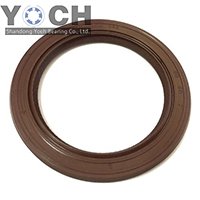
The fundamental design incorporates inner and outer raceways, rolling elements, cage assemblies, and most importantly, the sealing components. These seals are typically manufactured from synthetic rubber compounds such as nitrile butadiene rubber (NBR), fluoroelastomer (FKM), or hydrogenated nitrile rubber (HNBR), selected based on operating temperature ranges and chemical compatibility requirements.
Bearing Seal Configuration Types
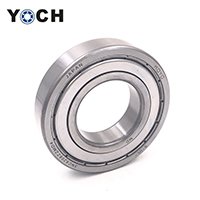
Bearing manufacturers offer various seal configurations to address different application demands. The most common types include contact seals (RS type), non-contact seals (RZ type), and labyrinth seals. Contact seals provide maximum protection by maintaining physical contact with the inner ring, effectively preventing ingress of dust, moisture, and particulate contaminants.
Non-contact seals feature minimal clearance between the seal lip and inner ring surface, offering reduced friction while maintaining adequate protection. This configuration is particularly suitable for high-speed applications where heat generation from seal friction must be minimized. Labyrinth seals utilize complex geometric pathways to create tortuous passages that block contaminant entry without physical contact.
Critical Seal Profile Dimensions
Bearing seal effectiveness depends heavily on precise dimensional control of the seal profile. The critical parameters include seal lip diameter, lip angle, interference fit, and groove geometry. The seal lip diameter must maintain tight tolerances, typically within ±0.05mm, to ensure consistent contact pressure against the inner ring raceway.
The lip angle, usually designed between 15 to 30 degrees relative to the radial plane, determines the contact pressure distribution and sealing efficiency. Insufficient angle results in inadequate sealing contact, while excessive angle increases friction and accelerates wear. Interference fit between the seal outer diameter and bearing outer ring groove must provide secure retention without deformation.
Bearing Seal Material Properties
Bearing seal performance relies on material characteristics that withstand operational stresses. Hardness testing using Shore A durometers ensures materials fall within specified ranges, typically 70-85 Shore A for optimal balance between sealing effectiveness and flexibility. Tensile strength and elongation at break testing verify material integrity under mechanical stress.
Chemical resistance testing evaluates seal compatibility with various lubricants and environmental contaminants. Aging tests at elevated temperatures assess long-term material stability and compression set characteristics. These material properties directly influence seal longevity and bearing protection capability.
Visual Inspection Protocols
Bearing seal quality assurance begins with comprehensive visual examination. Inspectors evaluate seal surface finish for defects including porosity, inclusions, and molding imperfections. The seal lip must present a uniform, polished appearance without nicks, cuts, or irregular edges that could compromise sealing function.
Color consistency indicates proper material formulation and curing processes. Discoloration or surface blooming suggests material degradation or improper processing conditions. Dimensional verification using optical comparators or coordinate measuring machines ensures profile conformity to engineering specifications.
Bearing Seal Dimensional Measurement
Bearing seal inspection requires precision measurement techniques. Profile projectors enable two-dimensional analysis of seal cross-sections, verifying critical dimensions including lip height, base thickness, and overall width. Laser scanning systems provide three-dimensional surface mapping for complex seal geometries.
Surface roughness measurement using profilometers ensures seal contact surfaces meet specified finish requirements, typically Ra 0.4 to 0.8 micrometers. Roundness and cylindricity measurements verify seal concentricity, preventing eccentric loading and uneven wear patterns during operation.
Functional Testing Requirements
Bearing seal validation extends beyond dimensional inspection to functional performance testing. Pressure decay testing evaluates seal integrity by applying controlled air pressure and monitoring leakage rates. This non-destructive method identifies microscopic defects invisible to visual inspection.
Dynamic testing in simulated operating conditions assesses seal performance under rotational speeds, temperature variations, and contamination exposure. Torque measurement during these tests indicates seal friction characteristics and potential energy losses. Seal wear patterns observed after extended testing provide predictive data for service life estimation.
Conclusion
The structural characteristics of sealed bearings and rigorous seal profile inspection protocols are fundamental to ensuring reliable equipment operation. By understanding bearing seal design principles and implementing comprehensive quality control measures, manufacturers and users can maximize bearing service life while minimizing maintenance requirements and unplanned downtime.
We are a bearing supplier from China. If you want to learn more about other bearing knowledge, you can watch our YouTube or contact us.