|
Product Name |
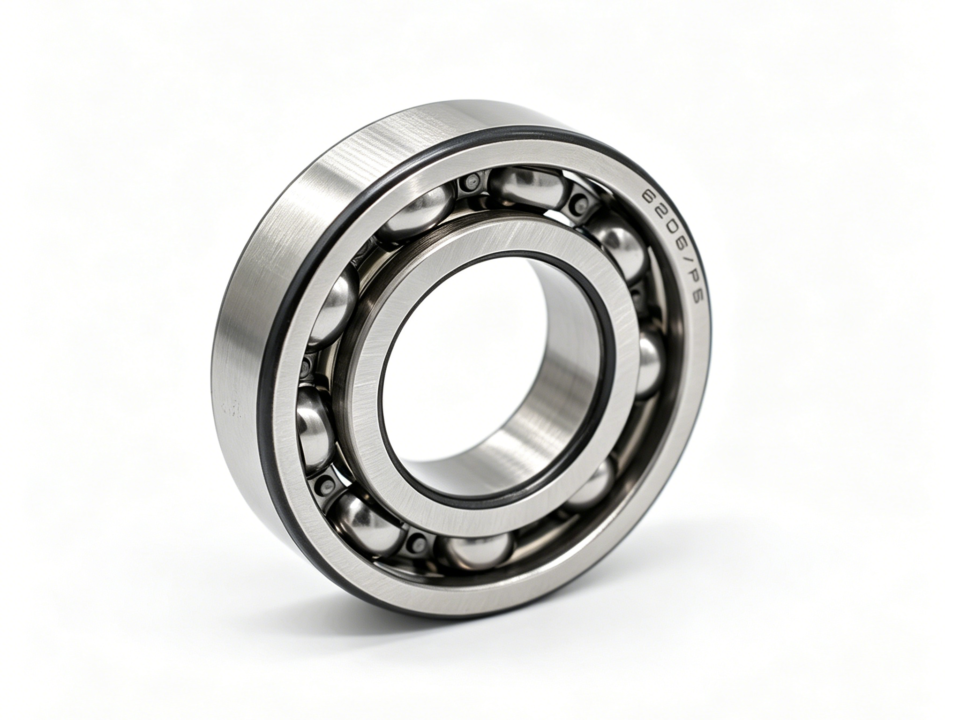
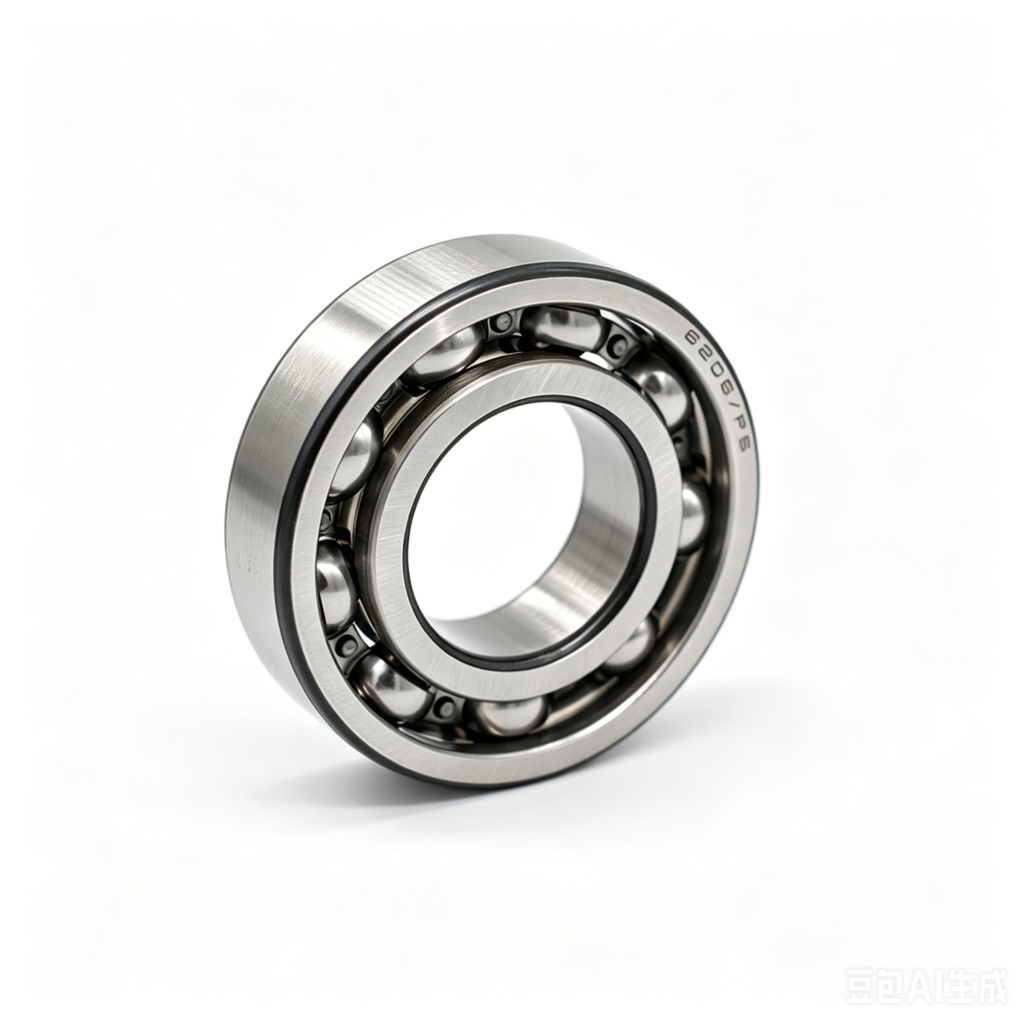
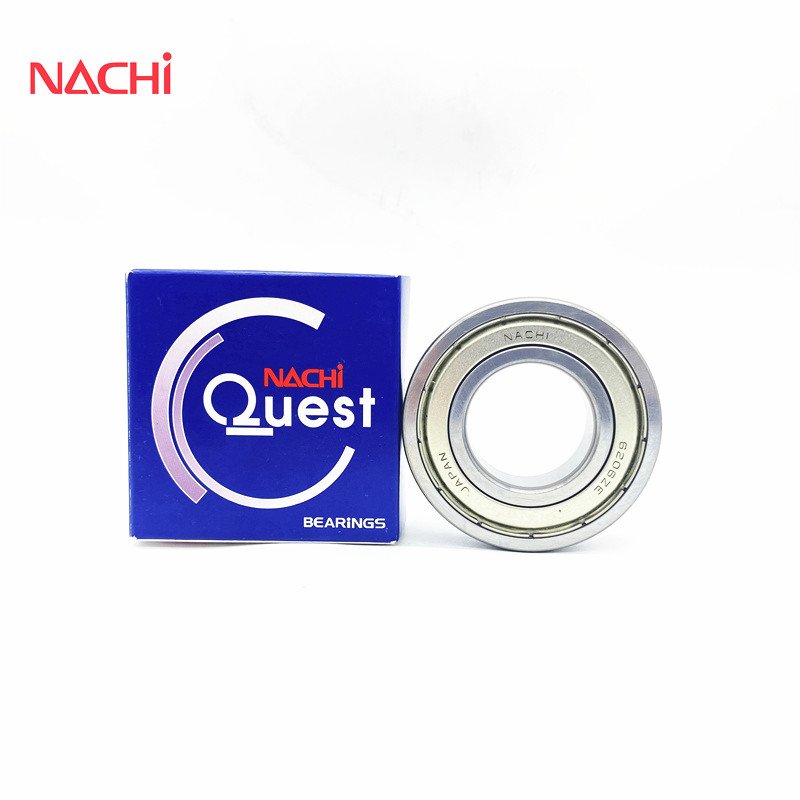
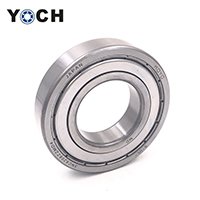
Bearings Supply Durable Ball Bearing NACHI High Speed 6206 ZZ Deep Groove Ball Bearing |
|
Material |
Chrome Steel/Gcr15 |
|
Seal Type |
Iron Seal |
|
Number of row |
Single Row |
|
Inside Diameter |
30mm |
|
Outside Diameter |
62mm |
|
Thickness |
16mm |
|
Weight |
0.199kg |
| OEM |
Available |
Bearing Composition
Bearing Characteristics
It consists of an outer ring, an inner ring, a set of steel balls and a set of cages.
It mainly bears pure radial loads, but also can bear joint loads. When it is subjected to pure radial load, its contact Angle is zero. When it has a larger radial game, that is, it has angular contact bearing performance, which can withstand a larger axial load.
Its structure is simple and easy to use.
Compared with other types of deep groove ball bearings of the same size, this kind of bearing has low friction coefficient and high limit speed. But not impact-resistant, not suitable for carrying heavy loads.


Rubber sealed bearings
Open sealed bearings
Metal sealed bearings
Advantages:To prevent any foreign intrusion,super dust effect.
Disadvantages: The price is relatively high,the general speed.
Advantages:High speed,idling effect .
Disadvantages: Dust effect is poor,easy into the dust,impurities and so on.
Advantages: High speed,has a good dust effect.
Disadvantages: Can not prevent the intrusion of liquid debris.
News
FAQ
1What are the characteristics of deep groove ball bearings?
Deep groove ball bearing has simple structure, and is easy to achieve higher manufacturing accuracy compared with other types, so it is convenient for serial mass production, manufacturing cost is also low, and it is widely used. When the radial clearance is larger, the axial bearing capacity increases and the contact Angle is zero when the pure radial force is borne. With axial forces, the contact Angle is greater than zero. Generally use ram wave cage, car solid cage, sometimes also use nylon frame. In addition to the basic type of deep groove ball bearing, there are a variety of variant structures, such as: deep groove ball bearing with dust cover; Deep groove ball bearing with rubber sealing ring; Deep groove ball bearing with a stop groove; Deep groove ball bearings with large load capacity and ball notches; Double row deep groove ball bearings. But they all share the following characteristics:
1. In the structure, each ring of deep groove ball bearing has a continuous groove raceway whose cross section is about one third of the ball circumference. It is mainly used to bear radial load, but also can bear a certain axial load;
2. When the radial clearance of the bearing increases, it has the property of angular contact ball bearing and can withstand the axial load alternating in two directions;
3, small friction, high speed;
4, simple structure, low manufacturing cost, easy to achieve high manufacturing accuracy;
5. Generally, stamping wave cage is used. Bearing with inner diameter greater than 200mm or high speed operation is adopted.
2What are the common types of bearing failures and the root causes of bearing damage?
Root analysis of bearing failure damage:
Bearing is the core component of most equipment. Once the bearing fails, the equipment will stop. It is particularly important to find the root cause to avoid the recurrence of the accident. In fact, once the bearing is damaged, it will gradually deteriorate until it cannot work, at which time all evidence of failure may be destroyed.
1. Wear and tear
Wear is one of the most common faults of rolling bearings, usually caused by foreign matter grinding damage, abrasion, groove marks, circumferential line marks or debris pollution, divided into two categories of wear wear and viscous wear.
The wear and tear is due to the small foreign matter inside the bearing, which may be external or internal pollution particles, such as metal particles or carbide brought by the gear. These particles will wear or grind raceway and rolling body. In tapered roller bearings, the wear degree of the roller end face and inner ring guard is far more serious than the raceway. This wear will cause the expansion of axial clearance or internal clearance, and then reduce the bearing life, resulting in bearing eccentricity. In addition, wear will also affect other parts of the machine where bearings are located. Pollutants can enter the bearing, usually serious wear or failure of the seal ring.
Viscous wear mainly occurs in light load, poor lubrication, rolling body speed difference is large resulting in sliding contact surface. This will cause the lubrication film to tear, slip, heat, resulting in the material may be transferred from the rolling body to the raceway or from the raceway to the rolling body. In the early stages, the appearance is a luminous surface, but soon it becomes a dull surface, with more or less adhesive materials.
2. Fatigue
The manifestation of fatigue is spalling, that is, the bearing material appears pitted or falls off, and the spalling initially occurs on the raceway or rolling body.
Fatigue from under the raceway surface is material deterioration, which is caused by the alternating stress under the raceway surface and eventually leads to material decay. Initially, cracks appear. Cracks develop slowly with bearing work. When cracks develop to the surface, spalling occurs.
Fatigue from the surface is usually caused by insufficient lubrication. The purpose of the lubricant is to create an oil film that separates the raceway from the rolling body. Metal-to-metal contact occurs when lubrication is poor. Due to material fatigue, small cracks appear, followed by micro-spalling. Initially, because the surface roughness is reduced, the surface may be very bright and smooth, but if it continues to develop, the surface will become dull, the surface will be broken more and more, there will be pitting.
3. Mechanical corrosion
Corrosion is usually caused by temperature changes in the bearing seat, condensation of the internal air, and continuous accumulation of water. And moisture or water often enters the bearing from the damaged or inappropriate sealing ring. Because of the high precision of the bearing raceway and rolling body surface, it is vulnerable to corrosion by moisture and water.
The root cause of friction corrosion is the micro movement between the two bearing surfaces. In most cases, this frictional corrosion occurs between the bearing outer diameter and the bearing seat and between the bearing hole and the shaft, and the micro-movement is mainly caused by the circulating load generated when the rolling body passes through. Bad fit, shaft bending or contact surface defects can lead to or accelerate the occurrence of friction corrosion.
Pseudohardening is also a kind of friction corrosion, which occurs in the contact area between the rolling body and the raceway. It is caused by the micro-movement and springback of the plastic contact surface caused by cyclic vibration.
4. Electric corrosion
When the current passes through the bearing, it will be conducted between the inner and outer rings of the rolling body, which may cause damage caused by excessive voltage. Contact surfaces occur in a process similar to arc welding (high density current on small contact surfaces), where the material is heated to varying degrees from tempering to melting. Discoloring areas of varying sizes appear in the appearance where the material has been tempered, rehardened, or melted. Pits of about 0.1mm to 0.5mm are formed where the material melts.
Similarly, damage can be caused by current leakage, which comes from stray current passing through the bearing, which is usually caused by a change in frequency. The main visible damage is the groove, which resembles a washboard pattern. The shape of these grooves is a contact ellipse in ball bearings and a contact line in roller bearings, and the rolling body usually appears uniformly faded. Therefore, the main visible damage is the tempering effect, that is, the bearing surface becomes soft. Pits are also usually visible when the damaged area is viewed with a high-power magnifying glass.
5, plastic deformation
Static or impact loads can produce overloads, which can lead to plastic deformation and indentation in the raceway. Usually improper installation is the root cause of this problem, that is, improper force on the bearing ring, resulting in impact load on the rolling body. The dent caused by debris is because external particles (pollutants) enter the bearing and are pressed into the raceway by the rolling body. The size and shape of the indentation depends on the nature of the particle. The geometry of the raceway at the dent is broken and lubrication is affected. Surface stress and fatigue lead to premature spalling.
The depression caused by handling is due to the bearing surface being damaged by hard sharp objects. Because of the high accuracy of the bearing surface, when the local overload, such as the bearing falling to the ground, it may knock out dents on the surface, so that the bearing can not work.
6. Rupture and cracking
Compression rupture is caused by local overload or excessive stress, resulting in stress concentration exceeding the tensile strength of the material. Common is the savage disassembly bearing (impact) or taper seat or bushing screw too tight. When the bearing ring is struck directly with a hammer and a hard chisel, small cracks may be formed.
Fatigue failure begins when the stress exceeds the fatigue strength in the bending state. It starts with a crack, then increases, and finally cracks the entire bearing ring or cage. Fatigue cracking may occur when a tight fit is used because a tight fit may produce high circumferential stresses. Then the alternating stress and circumferential stress act together, resulting in premature fatigue of the bearing ring, and the whole ring cracks.
Thermal cracking occurs when two surfaces rub heavily against each other, and the heat of friction generated causes cracks, usually at right angles to the direction of slide.
31. How to distinguish bearing accuracy?
International norms are formulated in accordance with ISO standards, generally are unified with ISO, some are more strict.
Accuracy is divided into specification accuracy and rotation accuracy. It's 0 degrees, 6X degrees, 6 degrees, 5 degrees, 4 degrees, 2 degrees.
The previous bearing code regulations in China are: Class G (0), Class E (6), Class D (5), Class C (4), Class B (2). The current standard code generally uses the German DIN specification.