- Welcome to YOCH Bearing!
- 0086-531-85866205
- 0086-16653196205
- market@yochibearing.com

Needle Bearing Structural Advantages and Key Points for Use in Confined Spaces

Tapered Roller Bearing Selection Criteria and Load Adaptation Techniques
09/06/2026Angular Contact Ball Bearing: Precision Grades and High-Speed Application
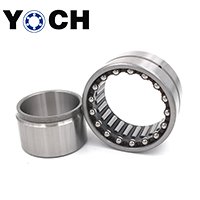
16/06/2026Needle bearings, also known as needle roller bearings, are a specialized type of rolling-element bearing distinguished by their exceptionally long, thin cylindrical rollers. These bearings are engineered to deliver outstanding load-carrying capacity within remarkably compact radial envelopes. In modern mechanical design, where space constraints are increasingly stringent, needle bearings have become an indispensable solution across automotive transmissions, industrial gearboxes, aerospace systems, and compact machinery. This article explores the structural advantages of needle bearings and outlines critical considerations for their successful deployment in confined spaces.
Bearing Structural Advantages of Needle Roller Design
The most defining characteristic of a needle bearing is its high length-to-diameter ratio, typically ranging from 3:1 to 10:1. This unique geometry enables needle bearings to occupy minimal radial space while supporting substantial loads. Compared to conventional deep groove ball bearings or cylindrical roller bearings of equivalent load capacity, needle bearings can reduce radial cross-section by up to 50%. This compact footprint makes them ideal for applications where housing dimensions are strictly limited.
Furthermore, needle bearings exhibit exceptional rigidity under radial loads. The elongated roller profile distributes contact stress across a larger surface area, reducing localized pressure peaks and enhancing fatigue life. In split-type and drawn-cup configurations, the thin-walled outer ring further minimizes overall assembly weight without compromising structural integrity. These attributes collectively position needle bearings as the preferred choice for high-load, low-profile mechanical systems.
Bearing Performance in High Load-Density Applications
Needle bearings excel in environments demanding maximum load density per unit volume. Their design philosophy prioritizes volumetric efficiency—delivering the highest possible dynamic load rating within the smallest possible envelope. In automotive planetary gear sets, for instance, needle bearings enable multiple gear stages to be stacked in limited axial length, directly contributing to transmission compactness and weight reduction.
The internal geometry of a needle bearing also supports higher rotational speeds than many users assume. While not matching the speed capabilities of angular contact ball bearings, properly lubricated needle bearings can operate reliably at moderate-to-high speeds, provided centrifugal effects on the rollers are managed. Caged needle bearing variants, in particular, reduce roller-to-roller friction and improve high-speed stability, making them suitable for demanding cyclic loading conditions.
Bearing Installation Considerations for Confined Spaces
Successful needle bearing installation in tight spaces demands meticulous attention to housing tolerances and shaft surface finish. Because needle bearings rely on direct contact between rollers and raceways, any deviation from specified geometric tolerances can lead to uneven load distribution, accelerated wear, or premature failure. Shaft hardness should typically exceed 58 HRC, with surface roughness controlled to Ra 0.2–0.4 μm to prevent brinelling and abrasive damage.
In drawn-cup needle bearing applications, the thin outer ring requires a precision interference fit with the housing bore. Installation must be performed using proper pressing tools that apply force evenly across the bearing cup face. Hammering or direct impact risks deforming the thin-walled outer ring, permanently compromising bearing geometry and operational accuracy. For split-type or cage-and-roller assemblies without an integral outer ring, careful alignment during mounting is essential to prevent roller skewing.
Bearing Lubrication Strategies in Compact Environments
Lubrication management presents unique challenges when needle bearings are deployed in confined spaces with limited access for maintenance. Grease lubrication is commonly preferred for sealed or shielded needle bearings, offering long service intervals and simplified sealing requirements. However, grease selection must account for operating temperature, load intensity, and environmental contaminants. Lithium-based greases with EP (extreme pressure) additives are widely recommended for needle bearing applications under heavy loads.
For open-type needle bearings in gearboxes or transmission housings, splash lubrication or oil mist systems may be employed. In such cases, oil viscosity and flow rate must be optimized to ensure adequate film thickness between rollers and raceways. Insufficient lubrication in needle bearings leads directly to metal-to-metal contact, rapid wear, and potential catastrophic failure—particularly in oscillating or start-stop duty cycles common in compact machinery.
Bearing Sealing and Contamination Control
Needle bearings operating in confined spaces are often exposed to dust, moisture, and process contaminants that can severely degrade performance. Integral seals—such as rubber-lipped contact seals or non-contact labyrinth seals—should be specified whenever environmental exposure is anticipated. In applications where external sealing is impractical due to space constraints, sealed needle bearing units (e.g., drawn-cup bearings with factory-installed seals) provide an elegant solution.
Contamination control extends beyond external sealing. During assembly, cleanroom practices or at minimum particle-free handling protocols should be observed. Even microscopic debris introduced during installation can become embedded in bearing surfaces, initiating pitting and spalling under cyclic stress. For needle bearings in hydraulic systems or precision instruments, filtered lubricant circulation systems are strongly advised to maintain ISO cleanliness codes.
Bearing Failure Modes and Preventive Measures in Tight Spaces
The most prevalent failure modes for needle bearings in confined installations include fatigue spalling, roller skewing, and cage fracture. Fatigue spalling typically manifests after extended service life and is influenced by load magnitude, lubrication quality, and material purity. Roller skewing occurs when rollers lose parallel alignment with the raceway, often due to housing deflection, shaft bending, or improper mounting. This condition generates excessive edge loading and can rapidly propagate to complete bearing seizure.
Cage fracture represents another critical concern, particularly in full-complement needle bearings without cages. While full-complement designs maximize roller count and load capacity, they are inherently more susceptible to roller wedging and cage stress under misalignment or shock loads. Where operational reliability is paramount, caged needle bearings should be prioritized despite their marginally lower load ratings. Regular vibration monitoring and temperature trending can provide early warning of incipient bearing distress, enabling scheduled maintenance before catastrophic failure occurs.
Bearing Selection Criteria for Space-Constrained Designs
Selecting the optimal needle bearing for a confined-space application requires systematic evaluation of load spectrum, speed requirements, mounting geometry, and environmental conditions. Engineers should begin by calculating equivalent dynamic load using ISO 281 methodologies, then cross-reference manufacturer catalog data to identify bearings meeting both load and envelope constraints. Where standard catalog bearings prove insufficient, customized drawn-cup or machined-ring needle bearings can be engineered to exact dimensional specifications.
Material selection also warrants careful consideration. Through-hardened bearing steel (e.g., AISI 52100) remains the industry standard, but case-hardened steels offer superior fracture toughness in impact-prone applications. For corrosive environments, stainless steel needle bearings or bearings with specialized coatings (such as phosphate or Dacromet) extend service life significantly. Ceramic needle rollers, though less common, provide exceptional performance in electric insulation or extreme-temperature scenarios.
Conclusion
Needle bearings represent a pinnacle of engineering efficiency—delivering maximum load capacity within minimal radial dimensions. Their structural advantages, including high length-to-diameter rollers, thin-walled outer rings, and exceptional rigidity, make them uniquely suited to space-constrained mechanical systems. However, realizing these benefits demands disciplined attention to installation precision, lubrication management, contamination control, and proactive maintenance monitoring. By adhering to the principles outlined in this article, design engineers and maintenance professionals can ensure that needle bearings perform reliably and durably, even in the most challenging confined-space applications.
We are a bearing supplier from China. If you want to learn more about other bearing knowledge, you can watch our YouTube or contact us.